The Symbiotic Relationship: How Brand Marketing Fuels Your Backlink Strategy
Introduction: Why brand marketing and backlinks reinforce each other
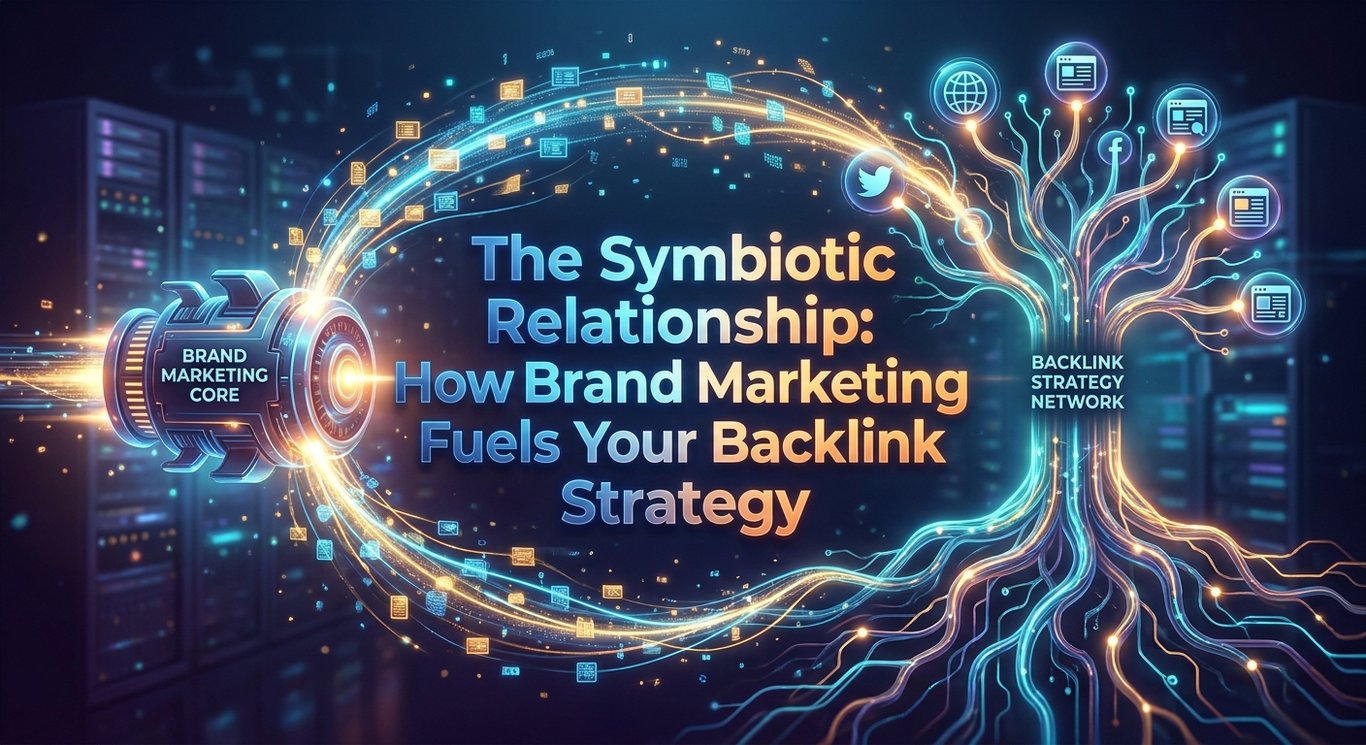
Brand marketing and backlink acquisition are not two separate strategies — they are deeply connected, and the best SEO results come when they work together. When a brand builds trust, recognition, and a strong reputation, it naturally becomes the kind of source that other websites want to reference. At the same time, earning high-quality backlinks from authoritative sites signals to search engines that a brand is credible, which further strengthens its visibility and reach. This cycle of reinforcement is what makes the relationship between brand marketing and link building so powerful. 🔗
Authoritative websites, journalists, and publishers are becoming more selective about who they cite and link to. They want to reference sources their audiences already know or can quickly verify as trustworthy. A brand that has invested in consistent messaging, thought leadership, and public visibility is far more likely to earn those citations than an unknown site with decent content. In short, recognizable brands get linked to more often because the people doing the linking feel confident in the association. That confidence is built through brand marketing — and it pays off in a very measurable SEO way.
What brand marketing means in a backlink strategy context
When most people think of brand marketing, they picture logos, color palettes, and taglines. But in the context of a backlink strategy, brand marketing means something much deeper. It encompasses awareness — how many people know you exist — as well as trust, reputation, and recall. A brand with strong awareness is one that people think of first in its category. A brand with strong trust is one that others feel comfortable recommending, citing, or linking to without hesitation. These qualities are built over time through consistent communication, genuine expertise, and showing up reliably in the spaces where your audience already spends time. 🎯
Those brand signals have a direct and practical impact on link-building activities. When you reach out to a journalist or blogger for a mention, they are far more likely to respond positively if they have already encountered your brand. When you pitch a guest post or collaborate on a piece of content, editors are more receptive if your name carries some weight in the industry. Even organic citations — the kind where someone links to you without being asked — happen more frequently when a brand has established itself as a go-to authority. Brand marketing, in other words, does the heavy lifting that makes every link-building tactic more effective.
Why strong brands attract more backlinks naturally
One of the most underappreciated advantages of strong brand marketing is how it lowers friction for the people who decide what to link to. Journalists working on deadline, bloggers looking for reliable sources, and editors curating resource pages all face the same challenge: they need credible references fast. When a brand is already familiar to them — because they have seen it in their industry feeds, read its content, or heard it mentioned by peers — the decision to link becomes almost automatic. Familiarity breeds confidence, and confidence drives citations. A lesser-known brand with equally good content often gets passed over simply because the editor has no frame of reference for it. 😮
Beyond familiarity, brands become truly "reference-worthy" through a combination of consistency, demonstrated expertise, and sustained visibility. A site that publishes thoughtful content regularly, maintains a clear point of view, and appears in relevant conversations over time starts to become a default source in its niche. This is not about gaming any algorithm — it is about genuinely becoming the kind of resource that people want to share and cite. When your brand has that reputation, backlinks follow naturally because linking to you reflects well on the person doing the linking. That is a powerful position to be in.
The role of content quality in earning both brand trust and links
Useful, original content is the foundation that holds both brand marketing and link acquisition together. Content that genuinely helps people — whether it answers a hard question, explains a complex topic, or provides data that others cannot easily find elsewhere — does double duty. It builds trust with your audience, which strengthens your brand, and it gives other sites a concrete reason to link to you. Without quality content, even the most aggressive outreach campaign will struggle to produce lasting results. Content is what gives your brand something worth citing. 📝
Certain content formats are especially effective at earning both attention and links. Original research and data reports are among the most powerful because they create a source that others must reference if they want to use the findings. In-depth guides and how-to resources attract links from educators and bloggers who want to point their audiences toward comprehensive explanations. Case studies demonstrate real-world results and are frequently cited in industry discussions. Interactive tools and calculators earn links because they provide ongoing utility. Each of these formats does more than rank for keywords — they position your brand as a producer of genuinely valuable knowledge.
"Good backlinks will come from reputable, relevant websites. They ultimately help improve your site’s authority." -Connectica
It is also important to remember that content built primarily for search engines rarely earns links the way content built for real people does. When you write with a specific audience in mind — addressing their actual questions, frustrations, and goals — the result is something that people genuinely want to share and reference. That human-first approach also tends to produce more natural, conversational writing that resonates with readers and encourages them to pass it along. Sharing and citation are social behaviors, and they respond to content that feels relevant and trustworthy rather than optimized and mechanical. Build for people first, and the links will follow. 🙌
How digital PR extends brand marketing into link opportunities
Digital PR is one of the most effective bridges between brand marketing and backlink acquisition. A well-executed PR campaign does not just generate buzz — it creates brand mentions across publications, news outlets, and industry blogs, many of which include or can be converted into actual backlinks. When a brand is featured in a news story, cited in an industry roundup, or quoted in a trend piece, it gains both visibility and authority. These placements reinforce the brand's credibility while simultaneously building the kind of link profile that search engines reward. PR and SEO, when aligned, multiply each other's impact. 📣
The specific tactics that make digital PR so effective for link building include press releases tied to genuinely newsworthy events, expert commentary offered to journalists covering relevant topics, and the creation of data-driven assets that media outlets want to report on. Being available as a knowledgeable source — through platforms like journalist query services — puts your brand in front of writers who are actively looking for citations. Trend commentary and timely responses to industry news can also earn placements in publications that might not otherwise cover your brand. Each of these approaches builds brand recognition while producing the kind of editorial links that carry real SEO weight.
Unlinked brand mentions and why they matter
An unlinked brand mention is exactly what it sounds like — someone has referenced your brand by name in their content, but they have not included a hyperlink back to your site. These mentions happen more often than most brands realize, and they represent one of the easiest backlink opportunities available. The person writing the content already knows your brand well enough to mention it, which means the hardest part of the outreach conversation is already done. All that is left is a simple, polite request to turn that mention into a clickable link. 🔍
"Identify unlinked brand mentions and politely request link attribution. This converts existing brand authority into tangible link equity." -Digital Kulture
Converting unlinked mentions into backlinks starts with monitoring. Tools that track brand mentions across the web — including news sites, blogs, forums, and social platforms — allow you to identify these opportunities as they appear. Once you have found a mention, a short and friendly outreach message explaining that a link would benefit the reader is often enough to get a positive response. This approach works particularly well because you are not asking for something out of nowhere — you are simply asking someone to complete a reference they have already started. Over time, consistent citation cleanup and mention monitoring can produce a steady stream of new links with relatively low effort.

Relationship-building with publishers, creators, and industry partners
Some of the strongest backlinks come not from cold outreach but from genuine relationships with publishers, content creators, and industry partners. When you collaborate with another brand on a co-authored piece, contribute a guest post to a respected publication, or partner on a joint research project, both parties benefit from the association. These collaborations earn links naturally because they are built into the content itself — and they also deepen the brand relationships that make future link opportunities more likely. Authority grows faster when it is shared and co-created rather than chased in isolation. 🤝
Effective outreach in this context is less about volume and more about personalization and mutual value. A message that references the recipient's specific work, explains why a collaboration makes sense for their audience, and clearly articulates what they stand to gain is far more likely to get a response than a generic template. The goal is to position any partnership as a win-win — where the other party gets something genuinely useful, whether that is great content, relevant data, or access to your audience. When outreach is approached this way, it builds relationships that go beyond a single link and create ongoing opportunities for brand exposure and citation.
Social media's indirect impact on backlink growth
Social media does not directly influence search engine rankings in the way that backlinks do, but its indirect impact on link acquisition is significant and often underestimated. When a brand maintains an active, engaging presence on social platforms, its content gets seen by more people — including the journalists, bloggers, and editors who are most likely to link to it. A post that gains traction on social media increases the odds that someone with a relevant website will discover the content, find it worth referencing, and include a link in their own writing. Social visibility is essentially a distribution engine for linkable content. 📱
"Content is the foundation: To earn backlinks, your content must provide real value." -Robin Waite
Community engagement and user-generated content also play a meaningful role in this process. When a brand fosters an active community — one where people discuss, share, and create content around the brand's topics — it multiplies the number of touchpoints that can lead to organic mentions and links. Shareable assets like infographics, data visualizations, and short-form video content that performs well on social platforms often finds its way into blog posts and articles, bringing links along with it. Building a social presence that encourages participation and sharing is, in this sense, an indirect but very real part of a long-term backlink strategy.
How brand authority influences link quality and relevance
Not all backlinks carry the same value, and understanding this distinction is critical to building a link profile that actually moves the needle. A link from a highly authoritative, well-trusted publication in your industry is worth far more than dozens of links from low-quality or irrelevant sites. Search engines evaluate links based on the authority of the linking domain, the relevance of the content surrounding the link, and the trustworthiness of the site overall. A strong brand is more likely to earn links from high-authority sources because those sources are selective — they want to be associated with names that their audiences recognize and respect. 🏆
This is why topical fit and natural context matter so much when evaluating backlink opportunities. A link from a site that covers topics closely related to yours carries more weight than a link from a tangentially related or completely unrelated domain. Search engines interpret contextually relevant links as a signal that your content is genuinely useful within a specific subject area. Authoritative brands tend to attract links that fit naturally into relevant content — because their expertise is well-established in a particular niche. Pursuing links that align with your brand's core topics is both an SEO best practice and a natural outcome of strong, focused brand marketing.
Measurement: tracking brand and backlink performance together
To truly understand whether your brand marketing is fueling your backlink strategy, you need to track both sets of metrics together rather than in isolation. Backlink data — including the number of new links, the authority of linking domains, and the anchor text distribution — should be monitored alongside brand metrics like branded search volume, direct traffic, share of voice, and the frequency of brand mentions across the web. When you see these metrics moving in the same direction, it is a strong signal that your brand-building efforts are translating into link-earning power. Treating them as separate reporting categories misses the connection that makes the strategy work. 📊
"Co-marketing, expert roundups, and data-driven content are examples of strategic partnerships that can produce high-quality, organic backlinks that improve SEO." -LinkedIn (Purple Planet)
Evaluating which specific brand-building activities produce the strongest link outcomes requires a bit of attribution work. Look at the content pieces, PR campaigns, or partnership announcements that generated the most new backlinks in a given period and ask what they had in common. Were they data-driven? Did they coincide with a social media push? Were they tied to a specific PR placement? Understanding the patterns that connect brand activity to link acquisition helps you prioritize the tactics that deliver the best results and refine the ones that underperform. Over time, this kind of measurement turns your strategy from a collection of activities into a feedback loop that gets smarter with every cycle.
Common mistakes that weaken the brand-to-backlink connection
One of the most common mistakes brands make is sending generic outreach messages to large lists of publishers with no personalization and no clear reason why the recipient should care. This approach treats link building as a numbers game, and it almost always produces disappointing results — along with a reputation for spammy behavior that can actually damage future outreach efforts. Weak content is another major problem: if the page you are asking people to link to does not offer something genuinely useful or interesting, even the warmest relationship will not be enough to earn a link. Poor targeting — reaching out to sites that are completely unrelated to your niche — wastes time and dilutes your brand's credibility. ⚠️
Perhaps the most damaging mistake, though, is over-optimizing for links at the expense of brand trust. When a site pursues links aggressively through shortcuts — buying links, participating in link schemes, or producing thin content just to have something to pitch — it may see short-term gains, but it builds no foundation of real authority. Search engines are increasingly sophisticated at distinguishing between links that reflect genuine brand recognition and links that were manufactured. A backlink profile built without corresponding brand trust looks exactly like what it is: artificial. And as algorithms improve, the gap between brands that have earned their authority and those that have faked it will only grow wider.

Future trends in brand-led link building and authority signals
The future of link building is increasingly shaped by how search engines understand entities — the people, brands, and organizations that exist in the real world. AI-driven search systems are getting better at recognizing whether a brand is genuinely established in its niche based on signals that go far beyond the links themselves. Brand mentions, co-citations, knowledge graph presence, and the consistency of a brand's topical authority across the web are all becoming part of how search engines evaluate credibility. This means that building a recognizable, well-documented brand presence is not just good marketing — it is increasingly a direct SEO signal. 🤖
"Building long-term relationships surpasses the idea of instant results. A strategic partner should be cared for and engaged regularly to foster ongoing collaboration." -Lanin Star Marketing
Authoritative, recognizable brands are positioned to benefit most from these changes. As AI-driven discovery tools and search engines become more entity-aware, the brands that have invested in consistent visibility, genuine expertise, and real relationships will outperform those relying on purely tactical link acquisition. Thin campaigns built around volume rather than value will face increasing headwinds, while brands with strong reputations will find that links come more easily and from better sources. The future belongs to brands that have done the work — and the brands that understand this now will have a significant head start.
FAQ: The Symbiotic Relationship: How Brand Marketing Fuels Your Backlink Strategy
What is the connection between brand marketing and backlinks?
Brand marketing and backlinks are connected through the concept of trust and recognition. When a brand builds a strong reputation and becomes well-known in its industry, other websites are more likely to reference and link to it. The more a brand is cited, the more authority it gains in the eyes of search engines, which in turn boosts its visibility and makes it even easier to earn future links. The relationship is circular: brand marketing creates the conditions for backlinks, and backlinks amplify the brand's reach and credibility. Together, they form a growth loop that compounds over time. 🔄
How does brand awareness help a website earn more backlinks?
Brand awareness reduces the hesitation that journalists, bloggers, and editors feel when deciding whether to link to a source. When someone already recognizes a brand name, they are more confident that linking to it will reflect well on their own content. Awareness also increases the chances that your content will be discovered in the first place — through social sharing, search visibility, or word of mouth — which expands the pool of potential linkers. In simple terms, the more people know your brand exists and associate it with quality, the more opportunities you create for organic and earned backlinks. 💡
Which brand marketing tactics create the most backlink opportunities?
The brand marketing tactics that create the most backlink opportunities are those that combine genuine value with broad visibility. Original research and data reports are consistently among the strongest link magnets because they give other content creators something unique to cite. Digital PR campaigns that result in media placements generate editorial links from authoritative publications. Thought leadership content — including expert commentary, in-depth guides, and trend analysis — positions a brand as a go-to source that others want to reference. Partnerships and co-marketing initiatives also create natural link opportunities while simultaneously building brand relationships that produce future citations. 🚀
How do unlinked brand mentions turn into backlinks?
Unlinked brand mentions can be converted into backlinks through a straightforward process of monitoring and outreach. Start by using brand monitoring tools to track every instance where your brand is mentioned across blogs, news sites, and online publications. When you find a mention that does not include a link, reach out to the author or editor with a friendly message noting the mention and politely requesting that they add a hyperlink to your site. Because the person already knows your brand well enough to mention it, the conversion rate on these requests tends to be higher than cold outreach. It is one of the most efficient backlink tactics available, especially for brands with growing recognition. 📬
How can you measure whether brand marketing is improving backlink results?
Measuring the impact of brand marketing on backlink results requires tracking both sets of data in parallel. Monitor your backlink profile regularly — noting the number of new links, the authority of linking domains, and any trends in anchor text — and compare that data against brand metrics like branded search volume, direct traffic growth, and the frequency of brand mentions. When brand metrics rise and backlink acquisition improves around the same time, it is a strong indicator that your brand-building efforts are working. You can also track which specific campaigns or content pieces generated the most new links to identify the tactics that produce the strongest combined results. 📈
Conclusion: Bringing brand marketing and backlinks together for long-term growth
The central takeaway from everything covered here is simple but important: brand marketing creates the trust, visibility, and authority that make backlink acquisition easier, more efficient, and more durable. Brands that are recognized, respected, and consistently present in their industry attract links naturally — from journalists who know them, from bloggers who cite them, and from publishers who want to associate with their credibility. This is not a shortcut or a hack. It is the result of doing the real work of building a brand that people genuinely value and want to reference. When that foundation is in place, every link-building tactic you deploy becomes significantly more effective. 🌱
If you are ready to stop treating brand marketing and link building as separate activities, now is the time to bring them together into one integrated strategy. Align your content production with your PR efforts. Build partnerships that create mutual value and natural link opportunities. Monitor your brand mentions and convert them into citations. Show up consistently in the conversations your audience is already having. When content, PR, partnerships, and outreach all work toward the same goal — building a brand that earns its authority — the results are far greater than any single tactic could produce on its own. That is the real power of the symbiotic relationship between brand marketing and your backlink strategy. 💪
Additional expert insight: why relationship-led link building scales better
Relationship-based outreach consistently outperforms mass link requests because it operates on a fundamentally different principle. Instead of treating publishers as targets to be converted, it treats them as partners to be engaged. When you take the time to understand what a blogger, editor, or content creator actually cares about — and approach them with something genuinely relevant to their work — the response rate improves dramatically. More importantly, the links you earn through relationships tend to come from better sites, appear in more natural contexts, and open the door to ongoing collaboration rather than a one-time transaction. Quality over quantity is not just a cliché here — it is a measurable advantage. 🤝
Mutual benefit, credibility, and consistent brand exposure are the three ingredients that make relationship-led link building scale over time. When a publisher knows your brand, trusts your content, and has had a positive experience working with you, they are far more likely to reach out proactively the next time they need a source or a collaborator. This creates a compounding effect where your link velocity increases not because you are sending more outreach emails, but because your brand has built a network of advocates who think of you first. Over months and years, this kind of relationship-driven approach builds a link profile that is both stronger and more resilient than anything that could be achieved through volume-based tactics alone.
FAQ expansion: common online questions and answer angles
Do branded searches affect backlink potential?
Yes, branded searches have a meaningful indirect effect on backlink potential. When people search for your brand by name, it signals to search engines that your brand has real-world recognition and demand — which contributes to your overall authority. Higher authority makes your site a more attractive link target for publishers who want to associate with credible sources. Additionally, increased branded search volume often correlates with more people discovering your content, which expands the pool of potential linkers. Growing your branded search presence through consistent marketing, memorable content, and strong community engagement is therefore a legitimate part of a long-term link-building strategy. 🔎
Can social proof increase editorial mentions and links?
Social proof — in the form of testimonials, case studies, follower counts, media logos, awards, and user reviews — can absolutely increase the likelihood of editorial mentions and links. When a journalist or blogger is evaluating whether to cite a brand, visible social proof reduces their perceived risk. A brand with documented credibility signals is easier to vouch for than one with none. Social proof also tends to make outreach more effective: when you reach out to a publisher and your website clearly demonstrates that others already trust and value your brand, the case for linking to you becomes much easier to make. Building and displaying social proof is therefore both a brand marketing and a link-building investment. ⭐
Should brand marketing come before link building or happen at the same time?
Ideally, brand marketing and link building should happen simultaneously rather than sequentially, but the balance may shift depending on where a brand is in its development. For newer brands with very little recognition, investing in brand awareness first — through content, social presence, and PR — creates a foundation that makes link-building outreach more productive. Trying to build links with zero brand recognition is an uphill battle. However, even early-stage brands should not wait until they feel "established" before pursuing links, because link building itself contributes to brand visibility. The most effective approach is an integrated one, where both efforts reinforce each other from the start and grow in parallel over time. ⏳
What content types are most likely to attract both brand mentions and backlinks?
The content types that consistently attract both brand mentions and backlinks share a few key characteristics: they are original, they provide unique value, and they are easy to reference. Original research and industry surveys top the list because they create data that other writers need to cite. Comprehensive guides and resource pages attract links from educators and practitioners who want to point their audiences toward authoritative explanations. Infographics and data visualizations are highly shareable and frequently embedded with attribution links. Expert opinion pieces and trend analyses earn mentions from journalists covering related topics. The common thread is that each of these formats gives someone a concrete reason to bring up your brand — and a natural place to drop a link. 📋
How long does it take for brand marketing to improve backlink acquisition?
The timeline for brand marketing to meaningfully improve backlink acquisition varies depending on the industry, the level of competition, and the consistency of the brand-building effort, but most brands start to see noticeable results within six to twelve months of sustained activity. Early wins often come from unlinked mention conversion and targeted PR placements, which can produce links relatively quickly once a brand has some visibility. Organic link acquisition — where sites link without being asked — typically takes longer to develop because it requires a level of brand recognition that builds gradually. The important thing to understand is that brand marketing is a compounding investment: the results grow faster the longer you stay consistent, and the brands that commit to it over years build advantages that are very difficult for competitors to replicate. ⏰