The Marketing Flywheel for SEO: How to Create Linkable Assets That Build Authority on Autopilot
1. What the Marketing Flywheel for SEO Is and Why It Matters
Define the flywheel model in SEO terms
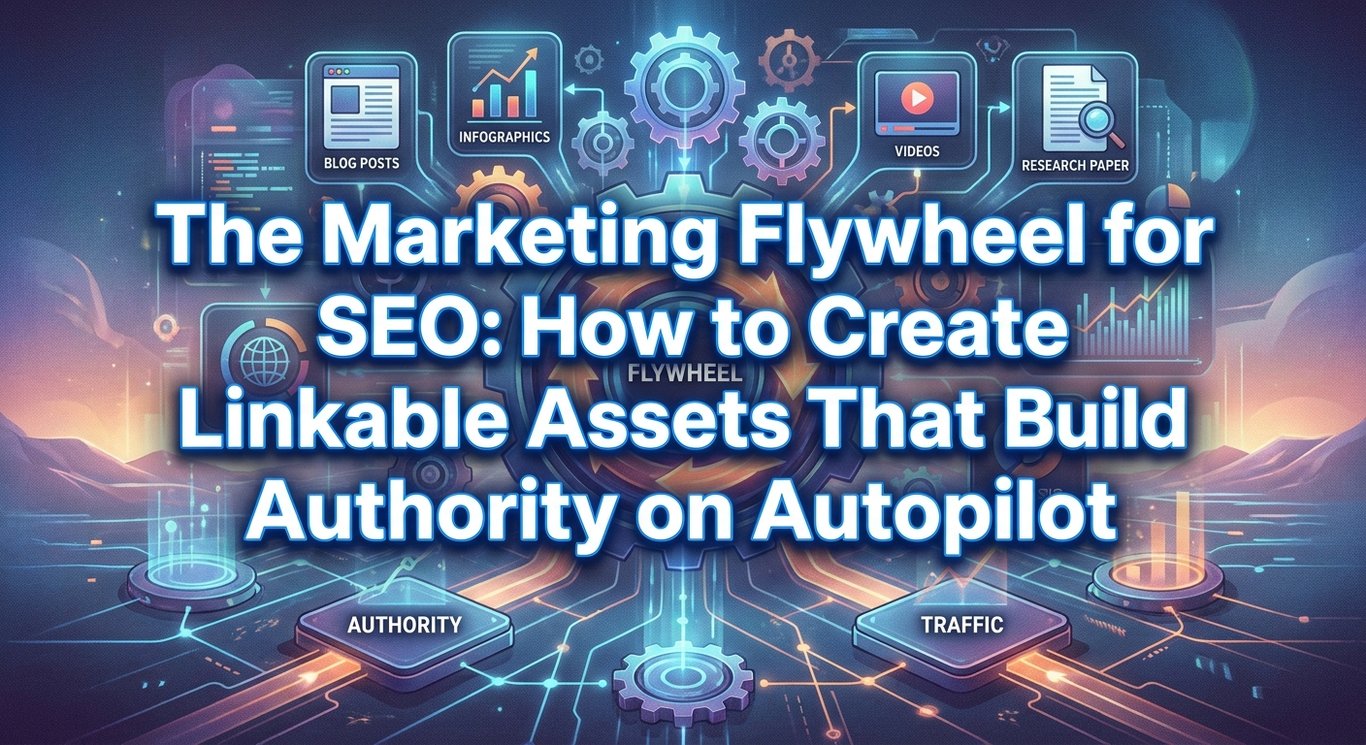
Most marketing campaigns work like a match — they burn bright for a moment, then go dark. The marketing flywheel for SEO works completely differently. Instead of running a one-off campaign and watching the results fade, a flywheel is a self-reinforcing system where each piece of content, each backlink, and each brand mention adds momentum to the next. Think of it like pushing a heavy wheel: the first push is hard, but once it's spinning, it keeps going with less effort. In SEO terms, this means your content earns links, those links boost your authority, that authority improves your rankings, and those rankings bring in more visibility — which earns even more links. When you layer in email marketing, PR, social sharing, and community engagement, each channel feeds the others, creating a compounding loop that a single campaign simply can't match. 🔄
Why authority compounds over time
Authority in SEO is not something you earn once and keep forever — but it does build on itself when you approach it strategically. Every time a credible website cites your content, links to your data, or references your framework, your domain earns a stronger signal of trust in the eyes of search engines. Over time, this means you don't need to rely on constant outreach bursts or paid promotion to maintain visibility. The goal shifts from chasing traffic to building assets that are genuinely easy for others to reference and hard for competitors to replicate. When your content becomes the go-to source for a specific topic, citations start arriving without you having to ask for every single one. That's the compounding effect of authority — and it's exactly what the flywheel model is designed to produce.
2. What Linkable Assets Are and Why They Work
Define linkable assets clearly
A linkable asset is a specific type of content — a page, tool, or resource — that is deliberately built to attract backlinks because it offers something genuinely valuable, original, and easy to cite. Unlike a standard blog post that covers a topic in a general way, linkable assets are engineered with the linker in mind. Examples include original research studies, industry statistics pages, free calculators, comparison guides, visual frameworks, how-to tools, and curated resource lists. What they all have in common is that they solve a real problem or answer a real question in a way that other writers, editors, and content creators want to point their readers toward. When someone is writing an article and needs a credible source to back up a claim, a well-built linkable asset is exactly what they reach for. 🎯
Explain the "easy to cite, hard to copy" principle
The best linkable assets share a specific quality: they organize complex or scattered information into a format that saves other people time. When an editor is writing a piece and needs a statistic, a comparison, or a clear explanation of a concept, they want a source they can link to quickly and confidently. High-performing assets often present original data, reusable frameworks, or answers to recurring questions in a way that standard blog posts simply don't. The "easy to cite, hard to copy" principle means your asset should be specific enough that it can't be quickly duplicated by a competitor, but clear enough that any writer can extract value from it in seconds. Authority websites consistently link to resources that make their own content stronger — so the more your asset does that job, the more naturally links will come to it.
3. How to Choose Topics That Can Earn Links Consistently
Find recurring pain points and search intent
Choosing the right topic is the foundation of any successful linkable asset. The process starts with keyword research, audience research, and competitive analysis — not with what your brand wants to promote. You're looking for questions that people are already asking repeatedly, problems that come up again and again in your industry, and gaps in the existing content landscape that nobody has filled well yet. Tools like Google Search Console, Ahrefs, Semrush, and even Reddit or Quora can reveal what your target audience is genuinely struggling with. The key insight here is that a great linkable asset answers a pre-existing need — it doesn't create demand for something your brand invented. When the topic already has an audience searching for it, your asset has a built-in reason to exist and a ready-made group of people who might link to it. 🔍
Prioritize evergreen opportunities
Not all topics are created equal when it comes to the flywheel model. Evergreen content — topics that stay relevant for months or years without needing constant updates — is especially powerful because it keeps attracting links and traffic long after the initial publication push. A piece of original research on a timeless industry question, for example, will continue earning citations years after you published it, while a post about a trending news story might spike and disappear within weeks. When your goal is long-term authority rather than short-term traffic, durable topics consistently outperform time-sensitive ones. The flywheel thrives on content that keeps spinning on its own, and evergreen assets are the fuel that makes that possible.
"At Asset Linkable, we build linkable assets that serve two purposes: strengthen topical authority and support bottom-funnel rankings." -Asset Linkable
4. The Most Effective Linkable Asset Formats in 2026
List the formats that earn attention
Certain content formats have proven themselves as reliable link magnets year after year, and 2026 is no different. Case studies that document real results give writers concrete proof points to reference. Original research and industry surveys provide the kind of data that journalists and bloggers actively hunt for. Free calculators and interactive tools earn links because they offer ongoing utility — people bookmark them and share them repeatedly. Comprehensive list posts, visual explainer guides, and step-by-step frameworks round out the formats that consistently attract editorial attention. What these formats share is that they're practical, reusable, and easy for someone else to cite in their own content. Multiple SEO and content marketing sources highlight these same formats because the logic behind them is simple: if your content makes someone else's job easier, they'll link to it. ✅
Match format to user intent and editorial value
Choosing a format isn't just about what's popular — it's about what best serves the specific topic you're covering. A complex process is often better explained through a visual step-by-step guide than a wall of text. A comparison between tools or strategies works beautifully as a structured visual layout. A recurring question in your industry might be best answered through a detailed framework that people can return to again and again. The key is to ask yourself: what format makes this information the most useful and the most referenceable? When the format matches the intent behind the topic, the asset becomes more valuable to the people most likely to link to it. Visual layouts in particular perform well for processes, pairings, comparisons, and conceptual frameworks because they communicate quickly and clearly.
5. How to Create a Linkable Asset That Feels Worth Referencing
Use research, structure, and originality
The difference between content that earns links and content that gets ignored often comes down to one thing: genuine originality. If your asset is just a rehash of what's already ranking on page one, there's no reason for anyone to link to it instead of the original. Strong linkable assets are built on original data, fresh angles, or a level of depth and organization that doesn't already exist online. This means doing the research — whether that's running surveys, compiling industry data, interviewing experts, or analyzing original findings — and then structuring the results in a way that's logical, scannable, and clearly useful. Quality control matters here too. A sloppy, poorly sourced asset won't earn trust from editors, no matter how good the underlying idea is. The foundation of a great linkable asset is rigor combined with a clear, differentiated point of view. 💡
"To keep it practical, you can run each new asset through a content quality filter: Does this page say or show something that’s hard to find elsewhere?" -SeoProfy
Make it easy for editors to use
Even the most valuable research won't earn links if it's buried in a hard-to-navigate page. Editors and writers are busy people — they're scanning for the specific stat, chart, or quote they need, and if they can't find it quickly, they'll move on to something else. This means your linkable asset should be designed with the end user's workflow in mind. Use clear headings that make the page easy to skim. Present key data points prominently so they're easy to extract. Include short, quotable explanations alongside any charts or visuals. Make sure your sourcing is transparent and easy to verify. When someone can land on your page, find exactly what they need in under 30 seconds, and confidently link to it, you've built something that will earn citations naturally over time.

6. Content Design and UX Choices That Increase Linkability
Use visual clarity and mobile-friendly layout
The way your content looks and functions on screen has a direct impact on how likely people are to cite it. A cluttered, hard-to-read page creates friction — even if the information inside is excellent, editors may hesitate to send their readers somewhere that feels unpolished or difficult to navigate. Readable layouts with strong visual hierarchy, clear section headings, and well-chosen visuals make a resource feel more professional and more trustworthy. On mobile, this matters even more, since a large portion of content discovery happens on phones. When your asset is visually clear and works well across devices, it removes a barrier to linking. And when the topic involves a comparison, a process, or a framework, choosing a visual format over plain text can dramatically increase how usable and shareable the content feels. 📱
Build trust with visible sourcing and freshness
Trust is a prerequisite for citation. Before an editor links to your content, they need to feel confident that it's accurate, credible, and up to date. This is why visible trust signals matter so much on linkable asset pages. Showing a clear author name and credentials, displaying a last-updated date, and citing your data sources transparently all communicate that your content is reliable. If a page looks like it was published years ago and never touched since, many editors will pass on it — even if the information is still accurate. Keeping your assets fresh, maintaining clear sourcing, and presenting authorship professionally all contribute to the perception of authority that makes editors comfortable linking to your content. Trust signals support both organic editorial linking and your site's overall perceived credibility.
"Once the asset is live, optimize it for search. That means a compelling title tag and meta description, proper header hierarchy, fast page load, and mobile responsiveness." -Asset Linkable
7. How to Promote Linkable Assets So the Flywheel Starts Turning
Use outreach, social, and owned channels
Even the best linkable asset in the world won't earn links if nobody sees it. 🚀 The flywheel doesn't start spinning on its own — it needs an initial push, and that push comes from deliberate, multi-channel promotion. Email outreach to relevant publishers, bloggers, and journalists puts your asset directly in front of the people most likely to cite it. Social media sharing — especially on platforms where your target audience is active — creates awareness and drives early traffic. Your own email newsletter is one of the most underrated distribution channels because it reaches people who already trust your brand. The goal of this initial promotion phase is to get the asset in front of enough people that organic sharing and linking can begin. Once the flywheel has enough momentum, it starts turning with less manual effort — but you have to give it that first push.
Turn one asset into many touchpoints
One of the most powerful aspects of the flywheel model is that a single strong asset can fuel content across multiple channels for weeks or even months. The original research report becomes a series of social media posts highlighting individual data points. The key findings get packaged into a newsletter feature. A chart from the asset becomes a shareable visual on LinkedIn or Instagram. A short-form video summarizes the main takeaways for YouTube or TikTok. A comment in a relevant Reddit thread or LinkedIn group references the asset as a helpful resource. Each of these touchpoints creates another opportunity for someone new to discover the original asset — and potentially link to it. The flywheel model works precisely because one strong piece of content creates multiple downstream exposures, each one adding a little more momentum to the spinning wheel.
8. How to Build a Repeatable Outreach System for Backlinks
Identify the right targets
Effective link outreach starts with building the right prospect list — and that means prioritizing topical relevance over raw domain authority metrics. A link from a mid-authority website that covers your exact topic is almost always more valuable than a link from a high-authority site that has nothing to do with your industry. Start by identifying websites, blogs, and publications whose audiences would genuinely benefit from your asset. Look for pages that already cover related topics, reference similar data, or answer questions that your asset addresses. Competitor backlink analysis can also surface sites that have linked to similar content in the past, making them warm prospects for your outreach. When your prospect list is built around genuine relevance, your pitches are more likely to land — because you're offering something the recipient's readers actually need.
"Start by building a target list. Who writes about your category? Who publishes industry reports, roundups, or resource lists?" -Asset Linkable
Personalize the pitch and make the value obvious
Generic link request emails are easy to spot and even easier to ignore. The difference between an outreach message that gets a response and one that gets deleted usually comes down to personalization and clarity. A strong pitch explains what your asset is, why it's relevant to the recipient's audience, and specifically how it would improve or support the content they're already publishing. Referencing a specific article they've written, mentioning a gap your asset fills, or noting a data point that would strengthen their existing content all signal that you've done your homework. Keep the message concise, make the value immediately obvious, and always make it easy for the recipient to take action. Personalized, relevant outreach consistently outperforms mass-blast link requests — and it protects your reputation in the process. 📧
9. How to Use Community, PR, and Relationships to Expand Reach
Leverage communities and niche discussions
Some of the most effective distribution for linkable assets happens not through formal outreach but through organic participation in online communities. Platforms like Reddit, Quora, LinkedIn groups, Facebook communities, and niche forums are full of people actively asking questions that your asset might answer. The key is to show up as a helpful contributor first — answer the question genuinely, add value to the discussion, and then share your resource as a natural extension of that help rather than a promotional drop. This approach works because it meets people at the exact moment they're searching for information, and it positions your asset as a solution rather than an advertisement. Over time, consistent community participation builds relationships and awareness that translate into organic links, shares, and repeat visits to your content. 🤝
Bring in creators, journalists, and experts
One of the fastest ways to expand the reach of a linkable asset is to involve external voices in its creation or promotion. Reaching out to industry experts for a contributed quote, inviting a journalist to preview your research before publication, or tying the asset launch to a webinar or live event all create natural reasons for others to share and reference your content. When respected figures in your space are associated with an asset, their audiences become potential link sources too. Early access programs — where you give a handful of influential creators or journalists first look at your data — can generate initial coverage that kickstarts the flywheel. External expert involvement also increases the perceived credibility of the asset, making editors more comfortable citing it in their own work.
"To create a content flywheel, start by developing one high-value hero asset (a report, webinar, industry playbook, or benchmark study)." -JustWords

10. How to Measure Whether the Flywheel Is Working
Track link and visibility signals
Measuring the success of a marketing flywheel for SEO requires looking beyond simple pageview counts. The metrics that matter most are the ones that reflect growing authority and compounding visibility. Track the number of new backlinks and referring domains your asset earns over time using tools like Ahrefs, Semrush, or Moz. Monitor organic search impressions and click-through rates in Google Search Console to see whether rankings are improving. Keep an eye on brand mentions across the web using tools like Google Alerts or Mention.com. Engagement metrics on your promotional channels — email open rates, social shares, community interactions — show whether your distribution efforts are landing. Together, these signals paint a picture of whether your asset is genuinely gaining authority or just collecting passive traffic. 📊
Measure compounding performance over time
The real proof that a flywheel is working shows up not in the first week after launch, but in the months that follow. A successful linkable asset should show a pattern of continued link acquisition, steady or growing organic traffic, and increasing brand mentions long after the initial promotion push has ended. Compare your launch-week metrics with your three-month and six-month numbers — if the asset is still earning links without constant manual outreach, the flywheel is spinning. Over time, a well-built system should reduce your dependence on paid promotion and manual link building as your assets continue generating authority organically. That reduction in effort for the same or better results is the clearest sign that the compounding effect is real and your flywheel is genuinely working.
11. Common Mistakes That Prevent Authority From Compounding
Avoid weak topics and self-promotional pages
One of the most common reasons linkable assets fail to earn links is that they were built around the wrong goal from the start. Content that is thin, vague, or primarily designed to promote a product or service rarely attracts editorial citations — because editors aren't looking for advertisements, they're looking for useful resources. If your asset is really just a thinly veiled sales pitch dressed up as a guide, experienced writers and journalists will see through it immediately. The strongest linkable assets are built around genuine utility: they answer a real question, solve a real problem, or present real data that someone else can use. Branding can be present, but it should never be the point. When utility comes first, links follow naturally — and when self-promotion comes first, they usually don't. ❌
"You should only build authoritative, relevant links from trusted sources in your industry." -Asset Linkable
Avoid one-and-done distribution
Publishing a great linkable asset and then doing nothing to promote it is one of the most common and most costly mistakes in content marketing. Without active distribution, even an excellent piece of content can sit unnoticed for months. But the mistake doesn't end at launch — many marketers promote an asset once, see modest results, and then move on to the next project, leaving a valuable resource to gather digital dust. The flywheel model requires a system that revisits, refreshes, and re-promotes assets consistently over time. Update the data annually. Reshare it when a relevant news story makes it timely again. Bring it back into your email newsletter rotation. Reference it in new content you publish. The assets that keep earning links are the ones that keep showing up — and that only happens when you have a repeatable distribution process, not a one-time launch plan.
12. FAQ: Common Questions About the Marketing Flywheel for SEO and Linkable Assets
What is a marketing flywheel for SEO?
A marketing flywheel for SEO is a self-reinforcing system where your content, linkable assets, and promotional channels work together so that each success makes the next one easier. When a piece of content earns backlinks, those links improve your domain authority, which helps future content rank faster, which brings in more visibility, which earns more links — and the cycle continues. Unlike a traditional funnel that ends at a conversion, a flywheel keeps spinning indefinitely, compounding your authority and reducing the manual effort required to maintain results over time. It's one of the most sustainable approaches to SEO because it's built on assets that grow in value rather than campaigns that expire.
What makes a linkable asset different from regular content?
The key difference between a linkable asset and regular content is intentionality. Regular blog posts are often written to inform or engage a general audience. A linkable asset, by contrast, is specifically designed to be cited, shared, or referenced by other writers, editors, and content creators. It achieves this by offering something unique — original data, a reusable framework, a free tool, or a level of depth and clarity that isn't available anywhere else. While a standard blog post might earn a few social shares, a well-built linkable asset earns editorial backlinks from authoritative sites because it genuinely improves the content of the people who link to it. That distinction in purpose shapes everything from topic selection to format choice to page design. 🏆
Which linkable asset format works best?
There's no single format that works best in every situation — the right choice depends on the topic, the audience, and the type of value you're offering. That said, certain formats consistently outperform others when it comes to earning links. Original research and industry surveys are perennial favorites because they produce unique data that journalists and bloggers actively seek out. Free tools and calculators earn links through ongoing utility. Case studies provide concrete proof points that writers love to reference. Visual frameworks and step-by-step guides work especially well for complex processes. The common thread is that these formats are easy to reuse and cite, which is exactly what makes them magnets for backlinks regardless of the year or platform.
How do I get backlinks to a new asset?
Getting backlinks to a newly published asset requires a proactive, multi-channel approach — because waiting for links to arrive organically on a brand-new page can take a very long time. Start with personalized email outreach to relevant publishers, bloggers, and journalists who cover your topic. Share the asset across your social media channels and email newsletter to generate early traffic and awareness. Participate in relevant online communities — Reddit threads, LinkedIn groups, Quora answers — where you can share the resource in a genuinely helpful context. If you included expert quotes or contributed data from industry figures, let them know the asset is live so they can share it with their own audiences. A combination of targeted outreach, community engagement, and expert collaboration gives a new asset the best chance of earning its first wave of links quickly.
How long does it take for the flywheel to work?
The honest answer is: it depends. The time it takes for a marketing flywheel to produce noticeable results varies based on the competitiveness of your topic, the quality of your asset, the strength of your promotion, and the existing authority of your domain. Some assets begin earning links within weeks of a well-executed launch; others take several months to gain traction. What's important to understand is that the flywheel model is not designed for immediate spikes — it's designed for compounding gains over time. The longer your assets are live and the more consistently you promote and refresh them, the more momentum the flywheel builds. Patience and consistency are the two most important ingredients, and the payoff tends to be authority that lasts far longer than any short-term campaign could produce. ⏳
13. Conclusion: How to Turn SEO Content Into a Self-Reinforcing Authority Engine
Summarize the key takeaways and reinforce the system
Building a marketing flywheel for SEO is not about finding a shortcut — it's about building something worth referencing and then making sure the right people can find it. The strongest SEO flywheels are built on useful, original, evergreen linkable assets that are supported by smart promotion, consistent outreach, and a commitment to long-term distribution. Every element of the system reinforces the others: great content earns links, links build authority, authority improves rankings, rankings drive visibility, and visibility creates more opportunities to earn links. When each asset is designed to be referenced and redistributed — not just read once and forgotten — the compounding effect of authority becomes real and measurable. The key is to approach every piece of content as an investment in a system, not just a one-off publication. 💪
Now it's your turn to put this into action. Choose one high-value topic in your industry — something your audience is genuinely searching for, something that isn't already covered exceptionally well, and something you can bring original data or a unique angle to. Build a linkable asset around it with real research, strong structure, and a format that makes it easy for editors to cite. Then create a repeatable promotion process: outreach, community sharing, social distribution, expert involvement, and regular refreshes that keep the asset earning attention long after launch. Use the framework in this guide to turn The Marketing Flywheel for SEO: How to Create Linkable Assets That Build Authority on Autopilot into a lasting authority-building system — one that gets stronger with every asset you add to it. 🚀