Introduction: Why Multi-Channel Campaigns Matter Today
A multi-channel marketing campaign is a strategy where a brand interacts with customers across several different platforms, such as social media, email, and websites, to promote a product or service. Unlike a single-channel approach that relies on just one method, or an omnichannel approach that seamlessly integrates every single touchpoint, multi-channel marketing focuses on casting a wider net to meet people where they are. In today’s fast-paced digital world, relying on just one way to talk to your audience is rarely enough because people switch between devices and apps constantly. Therefore, understanding how to effectively manage these various platforms is essential for modern marketing success.
The benefits of running a multi-channel campaign are significant, offering businesses a chance to drastically increase their visibility and engagement. By appearing on multiple platforms, you create more opportunities for potential customers to see your message, which builds brand recognition and trust over time. Furthermore, this approach often leads to a higher return on investment (ROI) because you are capturing leads who might have missed your message if it were only on one channel. 🚀 This guide will walk you through the entire process, ensuring you have the tools to plan and execute a winning strategy.
Understanding Multi-Channel Marketing vs. Omnichannel and Single-Channel
To plan effectively, it is crucial to define the differences between multi-channel, single-channel, and omnichannel marketing. Single-channel marketing involves using just one method to reach customers, like sending only emails, while multi-channel marketing uses several independent channels to spread a message. Omnichannel marketing is a more advanced version of multi-channel, where all the channels are fully integrated to provide a seamless experience, meaning if you stop shopping on your phone, you can pick up exactly where you left off on your laptop. While they sound similar, multi-channel focuses on presence, whereas omnichannel focuses on a unified experience.
These different approaches have a major impact on the customer journey and how people perceive your brand. In a single-channel setup, the journey is simple but limited; however, in a multi-channel environment, a customer might see an ad on Facebook and later receive an email, but the data between these two interactions might not be perfectly connected. Omnichannel strives for total consistency and personalization by sharing data instantly across platforms, but it requires complex technology. For most campaigns, the goal is to ensure that even if the channels aren't perfectly synced, the messaging remains consistent enough to build trust.
For many small or growing businesses, prioritizing a multi-channel strategy is often smarter than trying to achieve full omnichannel perfection right away. A common misconception is that you must be everywhere at once with perfect data integration, but that can be expensive and resource-heavy. Instead, focusing on a strong multi-channel approach allows you to expand your reach and test different platforms without the overwhelming technical requirements of a fully omnichannel system. 💡
Step 1: Clarify Your Vision, Goals, and Success Metrics
The first step in any successful campaign is to articulate a clear vision that explains exactly what you want to achieve. This vision should align with your broader business objectives, whether that means increasing brand awareness, generating new leads, boosting sales for a specific product, or improving customer retention. Without a "big picture" reason for the campaign, your team might get lost in the details of posting content without knowing why they are doing it. Consequently, a strong vision acts as a compass that keeps every channel moving in the same direction.
Once the vision is set, you need to translate that into SMART goals—Specific, Measurable, Attainable, Relevant, and Time-bound. For example, instead of saying "we want more sales," a SMART goal would be "generate $50,000 in revenue from the summer collection within the next 90 days." Another example could be "increase email subscriber list by 15% during the Q3 promotion." Setting these concrete targets ensures that everyone knows exactly what success looks like and provides a benchmark to aim for throughout the campaign.
Finally, you must identify the key performance indicators (KPIs) that will tell you if you are on track to meet your goals. Common KPIs for multi-channel marketing include click-through rates (CTR), conversion rates, assisted conversions (where one channel helps another get the sale), and return on ad spend (ROAS). Measuring these outcomes is vital because it moves marketing from a guessing game to a science. By tracking the right data, you can prove the value of your efforts and understand which parts of your multi-channel mix are performing best.
Step 2: Research and Define Your Target Audience & Buyer Journeys
Before you spend a dime on ads, you need to conduct deep audience research to understand exactly who you are talking to. This involves looking at demographics like age and location, as well as psychographics like interests, values, and lifestyle choices. You can use existing customer data, surveys, and social media insights to build detailed buyer personas that represent your ideal customers. Knowing who they are helps you avoid shouting into the void and ensures your message lands with the right people.
After defining your personas, the next task is mapping out their customer journeys across the different stages of the buying cycle. You need to identify what a customer needs during the awareness, consideration, decision, and post-purchase phases. For instance, someone in the awareness phase might need an educational blog post, while someone in the decision phase needs a discount code or a case study. Identifying these key moments allows you to place the right message in front of them at the exact time they are ready to receive it.
Ultimately, your audience's preferences should dictate which channels you select and the type of content you create. If your research shows that your target audience loves short videos and spends hours on TikTok, but ignores long emails, you should adjust your strategy accordingly. 🎯 Ignoring these preferences leads to wasted budget and low engagement. Therefore, letting the data guide your choices on content formats, timing, and offers is the secret to making your audience feel understood and valued.
"Goals need to be specific and measurable or you won’t be able to define success." -Outbrain
Step 3: Select and Prioritize the Right Channels
There is a vast menu of marketing channels available today, including email, social media platforms like Instagram and LinkedIn, paid search, display retargeting, direct mail, SMS, and even in-store promotions. Each channel has its own strengths; for example, email is great for nurturing leads, while social media is excellent for building brand awareness. Understanding the unique role of each platform is the starting point for building a mix that works for your specific campaign.
However, you shouldn't try to be everywhere at once; instead, use your research and analytics to choose 4–7 primary channels that align with your audience's behavior. It is better to execute brilliantly on a few channels than to do a mediocre job on many. You must also consider your budget and your team's internal capabilities—if you don't have a video editor, YouTube might not be the best choice right now. Prioritizing channels where your audience is most active ensures you get the best bang for your buck.
A strong multi-channel campaign often balances online and offline channels to maximize reach and frequency. For instance, you might combine a direct mail postcard with a follow-up email and a targeted social media ad to surround the customer with your message. This combination reinforces the brand because seeing a message in a physical mailbox and then again on a digital screen makes the offer feel more substantial. 📬 By layering these touchpoints, you increase the likelihood that the customer will take action.
Finally, it is important to leave room for testing new channels in a controlled way while being willing to let go of what isn't working. You might allocate a small portion of your budget to test a new platform like Pinterest or a podcast sponsorship to see if it yields results. If a channel consistently underperforms despite your best efforts, "sunsetting" or pausing it allows you to redirect resources to high-performing areas. This agility keeps your strategy fresh and efficient.
Step 4: Build a Unified Campaign Strategy, Positioning, and Message
To prevent your campaign from feeling disjointed, you must craft a central "big idea" and a clear value proposition that anchors everything you do. This core message should explain why your product matters and what problem it solves for the customer. Whether a customer sees your ad on Facebook or reads your email, the fundamental promise should remain the same. This consistency helps reinforce your brand identity and prevents confusion in the marketplace.
"To create a multichannel strategy, you first must understand your buyer. Create personas, talk to actual customers, and create tests on the channels where they are most active." -SAP Emarsys
While the core message stays the same, you must adapt the delivery to fit the tone and constraints of each specific channel. For example, a message on LinkedIn might be professional and data-driven, while the same concept on TikTok should be casual, fun, and short. A blog post allows for long-form storytelling, whereas a direct mail piece needs punchy, scannable copy. The art lies in changing the format without losing the heart of the message, ensuring it feels native to the platform.
Beyond the words, your visual brand elements—such as colors, fonts, logos, and voice—must be unified across all touchpoints. When a user clicks an ad and lands on a webpage, it should look and feel like the same universe. Even your Calls to Action (CTAs) should have a similar style, even if the exact wording varies slightly. This visual cohesion builds trust, making your brand look professional and reliable in the eyes of the consumer.

Step 5: Plan Budgets, Timelines, and Campaign Architecture
Turning your goals into reality requires a realistic budget that accounts for every cost involved in the campaign. You need to factor in the cost of media (like CPM or CPC for ads), the cost of creative production (designers, copywriters, video), and the cost of any tools or software needed. It is also wise to allocate resources for your team's time. By breaking these costs down early, you avoid running out of money halfway through the campaign and can allocate funds to the channels with the highest potential return.
Next, you need to build a detailed campaign calendar that outlines launch dates, the sequencing of channels, and the frequency of messages. You might decide to start with a "teaser" phase on social media before launching the main email blast, followed by retargeting ads a week later. This timeline should also include mid-campaign check-ins to review performance. A well-structured calendar prevents the chaos of last-minute scrambles and ensures a steady flow of communication to your audience.
Finally, consider the concept of campaign "architecture," which organizes how different pieces of content work together. You might have a "hero" asset, like a major ebook or a video launch, which serves as the main attraction. Supporting campaigns, such as blog posts and social snippets, then drive traffic to that hero asset. Additionally, nurture flows and retargeting layers ensure that people who showed interest but didn't buy are gently reminded to come back, creating a complete ecosystem.
"The exact number of channels varies, but four to seven is an excellent target for maximizing customer engagement." -Indeed
Step 6: Develop Channel-Specific Creative and Assets
Once your strategy is in place, it is time to start from your core concept and adapt the copy and visuals for each chosen channel. You shouldn't just copy-paste the same image everywhere; instead, resize images for Instagram Stories, write subject lines specifically for email, and draft short, punchy headlines for search ads. This process ensures that your creative looks native to the platform, which increases engagement rates. It takes more work, but the results are worth the effort.
When developing these assets, keep best practices for each channel in mind to maximize impact. For social media, your creative needs to be "scroll-stopping" with bright colors or movement to grab attention instantly. Emails need to be mobile-friendly since most people read them on their phones, and search ads must be keyword-oriented to match user intent. Furthermore, your landing pages must be clear, fast-loading, and directly related to the ad the user clicked on to prevent high bounce rates.
Crucially, you must align your Calls to Action (CTAs) and offers across all channels to guide users toward the same destination. Even if the wording changes slightly—from "Shop Now" on Instagram to "Claim Your Discount" in an email—the underlying offer and end goal should be identical. This reduces friction for the customer, as they aren't confused by conflicting offers. A unified path to purchase makes it easier for them to say "yes."
Lastly, don't forget about accessibility, mobile-first design, and brand safety. Ensure your videos have captions for those watching without sound, and that your images have alt text. Designing for mobile first is essential since that is where most traffic comes from today. Additionally, use ad placement controls to ensure your brand doesn't appear next to inappropriate content, protecting your reputation while you expand your reach.
Step 7: Integrate, Automate, and Coordinate Across Channels
Integration is the glue that holds a multi-channel campaign together, making shared data and a unified view of the customer absolutely crucial. If your email system doesn't "talk" to your website analytics, you won't know if a subscriber actually bought a product. By integrating your tools, you ensure that you are tracking the same person across different touchpoints. This allows for consistent experiences and accurate measurement, preventing you from sending a "buy now" email to someone who just purchased yesterday.
"It is vital to have a unified theme because the ads should be familiar to the customer regardless of the channel." -Infinity Direct
To manage the complexity of multiple channels, marketing automation tools and Customer Relationship Management (CRM) systems are your best friends. These tools allow you to orchestrate workflows, such as automatically sending an SMS coupon two days after a customer opens an email but doesn't click. 🤖 Automation handles the repetitive tasks and ensures that messages are triggered by customer behavior rather than manual guessing. This scalability allows you to treat thousands of customers personally without burning out your team.
Operational coordination is just as important as the technology; you need clear calendars and communication between teams. If you have one person managing social media and another managing email, they need to talk to each other to avoid conflicting messages or duplicating efforts. Establishing clear approval processes and assigning "channel owners" ensures accountability. Regular sync meetings help keep everyone aligned, ensuring the campaign runs smoothly like a well-oiled machine.
Step 8: Launch, Monitor, and Optimize Your Multi-Channel Campaign
Before you hit the "go" button, you must conduct a series of pre-launch checks to ensure everything is working correctly. This includes verifying that tracking pixels are firing, UTM parameters are attached to links for attribution, and QA testing all creatives and landing pages. Send test emails to yourself and click every link to make sure they work. It is often smart to do a phased rollout, launching on one or two channels first to catch any glitches before going full-scale.
Once the campaign is live, you need to monitor performance in real-time across your various channels. Keep an eye on early indicators like click-through rates (CTR), open rates, and social engagement to see if the creative is resonating. At the same time, watch lagging metrics like sales, leads, and ROI to see if that engagement is turning into business value. Dashboards that pull data from multiple sources into one view are incredibly helpful here.
The beauty of digital marketing is that you can optimize while the campaign is running; you don't have to wait until the end to fix things. If one ad variation is performing poorly, pause it and shift that budget to the winning version. You can also A/B test different headlines or offers, adjust the frequency of your emails, or update your audience targeting if you aren't reaching the right people. Continuous tweaking is the key to maximizing performance.
"Spreading your brand messaging across multiple channels establishes brand consistency that many customers rely on to build trust." -Indeed
Finally, schedule time for mid-campaign and end-of-campaign reports to capture insights. These reports shouldn't just be a list of numbers; they should tell a story about what happened. Analyzing this data helps you understand why certain channels worked better than others. These learnings are gold for your future planning, ensuring that every campaign you run is smarter and more effective than the last one.
Step 9: Measurement, Attribution, and Reporting Across Channels
Measuring success in a multi-channel world requires understanding attribution, which is the science of assigning credit to the different touchpoints a customer visited. You need to decide if you will use first-click attribution (giving credit to how they found you), last-click (giving credit to the final ad they clicked), or a multi-touch model that spreads the credit out. Multi-touch attribution is usually the most relevant for these campaigns because it acknowledges that the email, the social post, and the search ad all played a role in the sale.
Beyond attribution, you must build a measurement framework that connects your channel metrics to actual business outcomes. While "likes" and "shares" are nice vanity metrics, they don't pay the bills. You need to trace how those interactions lead to pipeline growth, revenue, and customer retention. By focusing on these hard numbers, you can prove the real financial impact of your marketing efforts to the leadership team.
When it comes time to present these results to stakeholders, use clear dashboards and narrative insights. Don't just dump a spreadsheet on their desk; explain what worked, what didn't, and why. Highlight the wins, be honest about the failures, and most importantly, provide recommended next steps based on the data. This transparency builds trust and demonstrates that you are managing the budget responsibly.

Step 10: Iterating and Scaling Your Multi-Channel Strategy
After the campaign concludes, conducting a retrospective or "post-mortem" meeting is essential for long-term growth. Gather the team to discuss what should be kept, what needs to change, and what should be stopped altogether based on the performance data. This honest reflection prevents you from repeating the same mistakes and helps you refine your playbook. It turns a one-off campaign into a learning experience for the whole organization.
"Managing campaign performance in all channels at one time can be a lot… Having a mid-campaign performance report as well as one at the end of the campaign is key to analyzing how optimizations helped the campaign reach its goal." -Infinity Direct
Once you have identified what worked, you can look for ways to scale your successful strategies. This might mean expanding the budget for the top-performing channels, adding new lookalike audiences to target, or testing additional channels you didn't use the first time. You can also evolve your creative concepts to keep them fresh while maintaining the elements that drove success. Scaling is about doing more of what works efficiently.
However, as you scale, you must be mindful of managing audience fatigue. If people see the exact same ad too many times, they will stop noticing it or get annoyed. To combat this, rotate your offers and creative visuals regularly, and adjust your frequency caps. Maintaining your brand reputation over time is just as important as getting the immediate sale, so keep the experience fresh and respectful of the user's attention. 🔄
Common Pitfalls and Best Practices in Multi-Channel Marketing
Even with the best plans, there are common mistakes that can derail a multi-channel campaign. One of the biggest pitfalls is inconsistent messaging, where the brand sounds serious on one channel and silly on another, confusing the customer. Another major error is spreading your budget and team too thin by trying to be on too many channels at once, resulting in mediocre content everywhere. Poor tracking setup is also a frequent issue; if you can't measure it, you can't improve it.
To avoid these traps, follow best practices like segmenting your audiences based on their channel preferences. If a group of customers only engages via email, don't waste money retargeting them on expensive display networks. Maintaining strict brand consistency across visuals and tone is also critical. Furthermore, aim to build many touchpoints over time rather than expecting a sale from a single interaction; patience and persistence usually pay off.
Compliance and privacy should never be an afterthought in your strategy. You must ensure you have proper opt-ins for email and SMS marketing and that you provide clear ways for users to unsubscribe. Respecting data protection laws like GDPR or CCPA is not just a legal requirement; it is a trust-builder with your audience. Being transparent about how you use data protects your brand from reputational damage.
To help you stay on track, use a simple checklist: 1) Are goals defined? 2) Is the audience researched? 3) Are channels selected based on data? 4) Is tracking set up? 5) Is the creative consistent? 6) Is the team coordinated? 7) Is the budget approved? Checking these boxes before, during, and after your campaign can save you from many headaches.
Real-World Example: A Sample Multi-Channel Campaign Walkthrough
Let's imagine a hypothetical scenario for a B2C athletic shoe brand launching a new eco-friendly running sneaker. The goal is to generate $100,000 in sales in the first month. The team chooses Instagram and TikTok for awareness (visuals), Email for consideration (details on eco-materials), and Google Shopping ads for the decision phase (capturing intent). They also plan to use a direct mail postcard with a QR code for VIP customers to add a physical touchpoint.
The campaign kicks off with "teaser" videos on TikTok showing the shoe's sustainable materials, building hype. A week later, the launch email goes out to the subscriber list, while Google Shopping ads turn on for keywords like "sustainable running shoes." As users visit the site but don't buy, they are retargeted on Instagram with a carousel ad showing 5-star reviews. Throughout the month, the team tweaks the ad copy on Google and changes the email subject lines to improve open rates.
By the end of the month, the campaign hits $110,000 in sales, exceeding the goal. The team learns that TikTok drove the most traffic, but Email drove the highest conversion rate. They also found that the direct mail piece had a high redemption rate among VIPs. These learnings—that video drives interest and email closes the deal—will shape their next product launch, making it even more efficient.
FAQs About How to Plan and Execute a Multi-Channel Marketing Campaign
1. How many channels should I use in my first multi-channel campaign?
For a first campaign, it is generally recommended to start with a range of 3 to 5 channels. Using more than that can quickly become overwhelming and dilute your budget, making it hard to see what is actually working. It is much better to match your channel count to your available budget and team resources; mastering a few key platforms where your audience is most active will yield better results than doing a poor job on ten different sites.
2. What is the difference between multi-channel and omnichannel marketing?
The main difference lies in the level of integration. Multi-channel marketing focuses on having a presence on many different platforms (like email, social, and web) that work somewhat independently to reach a wide audience. Omnichannel marketing, on the other hand, emphasizes a fully seamless, integrated experience where data flows instantly between channels, allowing the customer to switch devices without any disruption in their journey.
3. How long should a multi-channel campaign run before I evaluate results?
Typically, a campaign should run for at least 4 to 12 weeks to gather enough data to be meaningful. If you evaluate too early, say after just a few days, you might react to random fluctuations rather than real trends. However, you should have mid-campaign optimization points—perhaps weekly or bi-weekly—where you tweak performance, but save the major "success or failure" judgment for after the campaign has had time to mature.
4. Which KPIs matter most for measuring multi-channel marketing success?
The most important KPIs depend on your specific goals, but generally, you should look at conversions (sales or leads), revenue, and Return on Ad Spend (ROAS). Customer Acquisition Cost (CAC) is also vital to ensure you aren't spending too much to get a new client. While engagement metrics like clicks and likes are good for checking creative health, you should prioritize metrics that tie directly to your bottom line and business objectives.
5. How can small businesses run effective multi-channel campaigns on a limited budget?
Small businesses can compete by focusing on a few high-impact channels rather than trying to be everywhere. Repurposing content is a huge money-saver; turn a blog post into an email, a tweet, and a short video script. Utilizing affordable automation tools can also help you punch above your weight class by handling follow-ups automatically. By focusing strictly on the highest-ROI activities and being creative with assets, small budgets can still drive big results.
Conclusion and Next Steps: Putting Your Multi-Channel Campaign Into Action
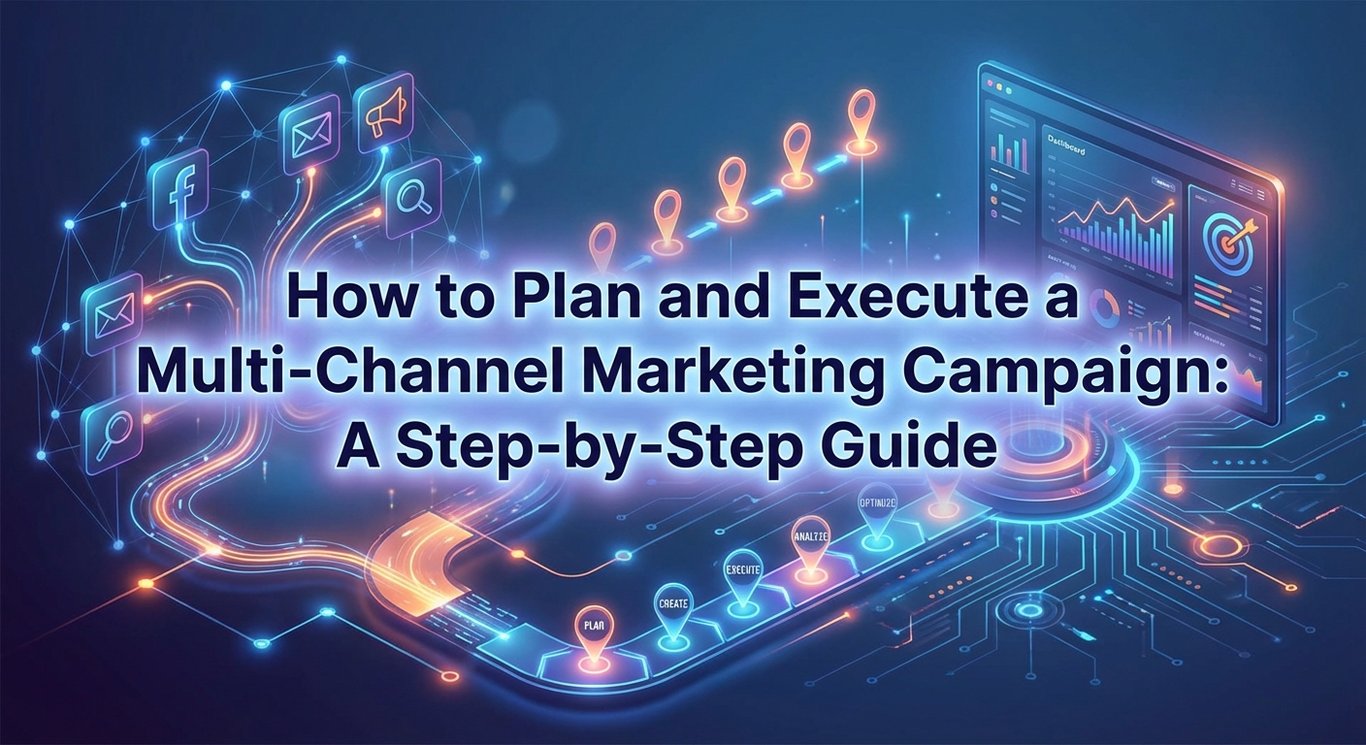
Planning and executing a multi-channel marketing campaign doesn't have to be a chaotic experiment. By following the structured steps outlined in this guide—from defining clear goals and understanding your audience to selecting the right channels and building unified creative—you can create a strategy that cuts through the noise. We discussed the importance of integration, the power of automation, and the necessity of continuous measurement and optimization. Following this "How to Plan and Execute a Multi-Channel Marketing Campaign: A Step-by-Step Guide" transforms a complex process into a repeatable playbook that your organization can use to drive consistent growth.
Now is the time to stop reading and start planning. Pick one specific business objective you want to achieve next quarter, list out your top two audience segments, and select just 3–5 priority channels to pilot. Remember the key takeaways: keep your messaging consistent, coordinate your team, and let the data guide your decisions. By taking these first steps today, you are laying the foundation for a powerful marketing engine. Use this guide as your reference, and go launch a campaign that your customers won't be able to ignore! 🚀