Introduction
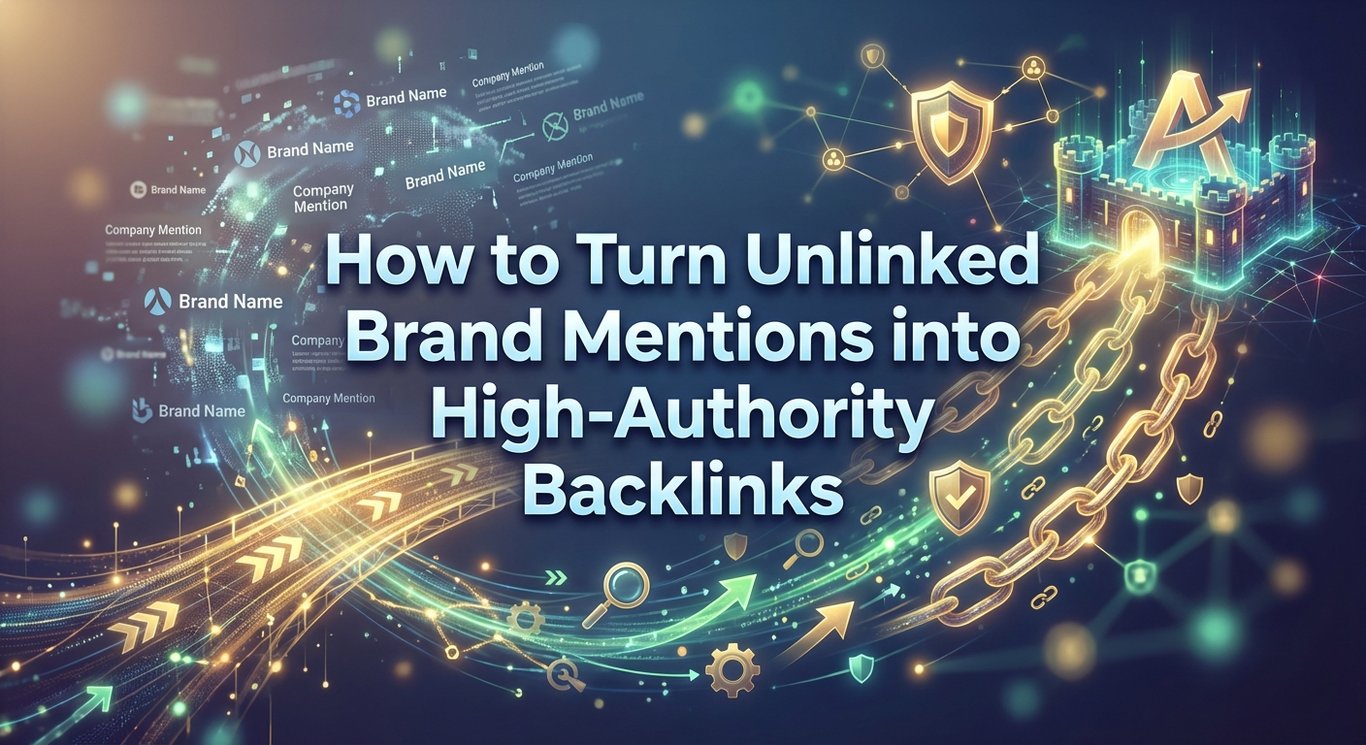
Imagine finding out that people are talking about your business at a party, but they aren't telling anyone where to find you. That is exactly what happens with unlinked brand mentions. An unlinked mention is when a website writes about your brand, products, or services but fails to include a clickable hyperlink back to your site. These mentions are incredibly frustrating because the hard part is already done; the writer knows who you are and likes what you do enough to write about it.
From an SEO perspective, these unlinked mentions are essentially free backlinks waiting to happen. The website owner has already validated your brand by including it in their content, which means the barrier to getting a link is much lower than with cold outreach. Instead of begging a stranger to look at your content, you are simply asking them to make their existing content more useful for their readers. This makes the conversion process significantly smoother and more successful.
Despite how effective this strategy is, converting these mentions into actual backlinks is often one of the most overlooked opportunities in link building. Many marketers focus entirely on creating new content or chasing difficult guest post spots while leaving these easy wins on the table. By learning how to systematically find and reclaim these mentions, you can build high-authority links that boost your search rankings without starting from scratch every time.
What Are Unlinked Brand Mentions and Why They Matter for SEO
An unlinked mention occurs whenever another website types out your brand name, product, or company slogan but does not turn that text into a clickable link. For example, a blogger might write, "The new coffee machine from BrewMaster is excellent," without actually linking the word "BrewMaster" to your homepage. While human readers can see your name, they can't click through to your site, and search engine crawlers don't get that valuable pathway to your domain.
Even without a link, these mentions still signal to search engines like Google that your brand is part of the conversation. This contributes to something called "Entity Recognition." Google begins to understand that your brand is a real, active entity that people are discussing. This helps build your E-E-A-T (Experience, Expertise, Authoritativeness, and Trustworthiness) profile. However, while a mention is good, a link is significantly better for passing actual ranking power.
When you successfully convert an unlinked mention into a backlink, you strengthen your website's backlink profile and Domain Authority (DA). A clickable link acts as a vote of confidence that passes "link juice" to your site, directly impacting how high you rank for your target keywords. By turning a passive mention into an active link, you are closing the loop and ensuring you get the full SEO credit you deserve for your hard work. 🚀
Types of Unlinked Brand Mentions You Should Target
To run a successful campaign, you need to understand the three main categories of unlinked mentions. The first and most common type is the direct brand mention. This is where a writer explicitly types your company name in the body of their text. These are the gold standard because the intent is clear, and the context is usually perfect for a homepage link. Direct mentions are generally the easiest to convert because the writer has already acknowledged your brand by name.
The second type involves image-based mentions. This happens when a website uses your custom infographics, product photos, or team headshots without linking back to you as the source. Often, they might credit you in the caption text but fail to include a hyperlink. These are fantastic opportunities because you have a valid claim to request "proper attribution," which most site owners are happy to provide to avoid copyright issues.
The third category is indirect references. This occurs when a site cites your research, data, or a unique concept you coined, but they paraphrase it without naming you directly or linking to the source. While these are harder to find and convert, they can be valuable. However, you should always prioritize direct mentions first. Since the site owner has already done the heavy lifting of naming you, asking for the link is a logical and welcome next step.
Step 1: Finding Unlinked Brand Mentions Across the Web
Finding these hidden opportunities requires a mix of free and paid tools. The most accessible starting point is Google Alerts. You can set this up for free to send you an email whenever your brand name appears on the web. You can also use Google search operators manually, such as typing "Your Brand Name" -site:yoursite.com into the search bar. This command tells Google to show every page that contains your brand name, excluding pages from your own website.
For a more robust strategy, paid tools like Ahrefs, Semrush, BuzzStream, and Talkwalker are essential. These tools crawl the web much deeper than standard alerts and can provide historical data. They allow you to filter results by language, date, and website authority. Using these tools ensures you don't miss mentions on high-traffic sites that might not trigger a basic Google Alert immediately.
"Unlinked mentions are low-hanging fruit: Sites that already mention your brand clearly see value in your content, products, or expertise. This existing awareness makes them more receptive to adding a link to the mention when approached thoughtfully." -Search Engine Land
When setting up your tracking, don't just look for your exact brand name. You should also set up alerts for your specific product names, your CEO's name, and common misspellings of your brand. If your company is named "TechSolutions," you should also track "Tech Solutions" and "TekSolutions." 🕵️♂️
Finally, don't forget about visual content. Use reverse image search tools like Google Images or TinEye to upload your most popular infographics or product photos. This will show you exactly where your images are appearing online. Often, you will find dozens of sites using your high-quality visuals without giving you a clickable credit link.
Step 2: Evaluating Websites for Authority and Relevance
Once you have a list of unlinked mentions, you must resist the urge to contact everyone immediately. Not all mentions are worth your time. You need to evaluate the quality of the website to ensure the link will actually help your SEO. Look at metrics like Domain Rating (DR) or Domain Authority (DA). A link from a site with a DR of 80 is worth significantly more than a link from a brand new blog with a DR of 5.
You should set specific thresholds to keep your team focused on high-impact wins. For example, you might decide to only pursue websites that have a DR above 30 and receive at least 5,000 monthly visitors. This filters out spammy websites or "link farms" that could actually hurt your reputation. If a website looks low-quality, has tons of pop-up ads, or publishes stolen content, it is better to ignore it.
Relevance is just as important as authority. Use tools like Ahrefs Site Explorer to check what keywords the mentioning site ranks for. If you sell software, a mention on a cooking blog might not carry much weight with Google, even if the site is popular. You want links from websites that operate in your niche or industry, as these provide the strongest contextual signals to search engines.
Step 3: Prioritizing Mentions for Rapid Response and Conversion
Timing is absolutely critical when it comes to converting unlinked mentions. You should aim to reach out within 24 to 48 hours of the mention going live. The reason for this is simple psychology: the content is fresh in the site owner's mind. They are likely still in "edit mode" and monitoring their post for comments or shares. If you catch them during this window, they are much more likely to log back into their CMS and add your link quickly.
If you wait weeks or months, the author has likely moved on to other projects. Asking them to go back and edit an old post feels like a chore, and your success rate will drop significantly. To manage this, you should organize your mentions by discovery date. Prioritize the newest mentions from the highest authority sites first.
To handle this efficiently, consider using automation tools that allow you to queue up outreach sequences. However, you must be careful not to lose the personal touch. The goal is to be fast but human. By setting up a system where you are alerted immediately, you can strike while the iron is hot and secure the link before the opportunity fades away. ⚡
"Use tools like BuzzStream, Talkwalker, and Ahrefs to monitor and uncover unlinked brand mentions in real-time." -BuzzStream

Step 4: Crafting Personalized Outreach for Higher Conversion Rates
Sending a generic, copy-paste email to a site owner is the fastest way to get your request deleted. Personalization is the key to turning a "no" into a "yes." Before you send an email, take five minutes to research the author. Read their recent articles, understand their writing style, and see if they have mentioned similar brands before. This small investment of time shows that you are a real person who actually cares about their content.
When you write your email, reference specific details from their article. Mention something you liked about their post or a specific point they made. This proves you actually read it. Your tone should be gracious and non-demanding. Start by thanking them for mentioning your brand—flattery goes a long way! Then, simply suggest that adding a link would make it easier for their readers to find the resource they are talking about.
To make this process scalable, use tools like Hunter.io to find the correct email address for the editor or author. Sending your request to a generic "info@" inbox often leads to a dead end. Once you have the contact info, you can use tools like BuzzStream to manage your email sequences. Just remember to customize the opening lines of every email to maintain that personal connection.
Timing your email send is also important. sending emails on Tuesday, Wednesday, or Thursday mornings usually results in higher open rates. Avoid Friday afternoons or weekends when people are checking out. By combining personalization with smart timing, you maximize the chances that your email gets opened, read, and acted upon.
Step 5: Converting Image-Based Mentions into Attribution and Links
Image-based mentions require a slightly different strategy than text mentions. First, use reverse image search tools to find where your charts, graphs, or photos are living on the web. You will often find that people love using high-quality visual assets but forget to cite the source. This is actually a great position to be in because you have a very strong reason to reach out.
When you contact the site owner, be polite but firm about attribution. You don't need to be aggressive or threaten legal action. Instead, say something like, "I noticed you used our infographic in your excellent post about market trends. We love that you shared it! Could you please add a source link so your readers know where the data came from?" Most site owners are relieved that you aren't asking them to take it down and will happily add the link.
This approach often encounters much less resistance than asking for a link in text. Site owners understand that using someone else's creative work requires credit. This strategy can uncover hidden link opportunities that standard text-monitoring tools will completely miss, giving you an edge over competitors who are only looking for brand names.
Step 6: Building Relationships Beyond Single Link Requests
The best link-building strategy isn't just about getting a link; it's about making a friend in the industry. When you reach out about an unlinked mention, view it as the start of a relationship. If a journalist or blogger mentioned you once, they are likely to do it again if they have a positive interaction with you. Treat them like a partner rather than a transaction.
"I recommend setting it to above 30 DR and Site Traffic above 5,000." -BuzzStream
Offer value beyond just asking for a link. You could offer to share their article on your social media channels, which brings them more traffic. You might also tell them, "If you ever need a quote or data for a future article on this topic, I'd be happy to help." This positions you as a helpful resource. 🤝
Crucially, never be aggressive or rude if they say no or ignore you. Harassing a writer will burn bridges and ensure they never mention your brand again. By being polite and helpful, you build a network of allies who will naturally link to you over time, leading to sustainable SEO growth that doesn't require constant cold outreach.
Measuring Results and ROI from Unlinked Mention Conversion
To know if your efforts are paying off, you need to track your results. You can start seeing new backlinks appear within weeks of a successful outreach campaign. However, the real SEO impact—like increased organic traffic and higher rankings—usually takes 3 to 6 months to fully kick in. Google takes time to re-crawl sites and recalculate the authority flowing to your domain.
You should track specific metrics to measure success. Keep a spreadsheet of how many mentions you found, how many emails you sent, and how many actually converted into links. This gives you a "conversion rate." You should also monitor the Domain Authority of the links you gained. One link from a high-authority news site is worth more than ten links from small blogs.
Use tools like Google Analytics and Google Search Console to see the bigger picture. Look for spikes in referral traffic from the sites that linked to you. Over time, watch your overall Domain Authority score in tools like Ahrefs or Moz. If that number is climbing, and your organic traffic is growing, your unlinked mention strategy is working. Just remember to set realistic expectations; this is a marathon, not a sprint.

Common Challenges and Solutions in Unlinked Mention Recovery
Marketers often face hurdles when trying to reclaim links. The biggest challenge is low response rates. It can be discouraging when you send 20 emails and only hear back from two people. The solution here is persistence and personalization. Follow-up emails are incredibly powerful; often, a polite "just bumping this to the top of your inbox" gets a response when the first email didn't.
Another challenge is the sheer volume of mentions for larger brands. It can feel overwhelming to sort through thousands of alerts. The solution is to use automation tools to filter out low-quality sites so you can focus only on the best opportunities. Don't try to reclaim every single mention; prioritize the ones that move the needle.
Finally, you might face resistance from site owners who ask for money in exchange for a link. This is against Google's guidelines. The best approach is to politely decline and move on. Don't let rejection get you down. There are plenty of other fish in the sea, and maintaining your brand's reputation is more important than forcing a single link.
"Tools like Ahrefs helped reclaim over 18,000 unlinked mentions into 53 backlinks on high-authority sites in just three months for one brand." -SEOmator
Advanced Strategies for High-Authority Backlink Acquisition
Once you have mastered the basics, you can move on to advanced tactics. One powerful strategy is to specifically target major media outlets and industry publications. These sites have massive authority. If you find an unlinked mention on a site like Forbes or TechCrunch, drop everything and prioritize that outreach. A single link from a tier-one publication can be a game-changer for your SEO.
Another advanced move is to look globally. Use international Top-Level Domains (TLDs) in your search. You might find that your brand is being discussed on .co.uk or .ca versions of popular sites. These global syndications are often overlooked but can provide valuable geographic relevance and authority signals.
You can also analyze your competitors to find new opportunities. Look at where they are getting mentioned. If a publication covers your industry and mentions three of your competitors, they should probably be mentioning you too. This allows you to reach out and say, "I saw your great article on X, and I thought our brand might be a good addition to your list."
Automating Your Unlinked Mention Workflow
To scale this process, you need a system. You can't rely on sticky notes and memory. Tools like BuzzStream, Ahrefs, and Semrush allow you to automate the discovery phase. You can set them to run weekly reports that dump new unlinked mentions directly into a dashboard. This saves you hours of manual searching.
Next, create templates for your outreach emails. However, these shouldn't be rigid scripts. Create "fill-in-the-blank" sections for the author's name, the specific article title, and a personalized compliment. This gives you the speed of automation with the effectiveness of personalization. 🤖
Finally, set up a tracking system. Whether it's a simple spreadsheet or a CRM, you need to know who you contacted and when. This prevents you from accidentally emailing the same person twice, which looks unprofessional. By balancing automation with a human touch, you can run a high-volume link reclamation machine that delivers consistent results.
FAQ: Common Questions About Converting Unlinked Mentions to Backlinks
1. How long does it take to see results from converting unlinked mentions into backlinks?
Typically, you can see the actual backlink appear on the referring site within a few days or weeks of your outreach, depending on how fast the webmaster responds. However, the SEO impact takes longer. You should expect to see measurable changes in your organic traffic and domain authority roughly 3 to 6 months after the links go live.
The timeline varies based on the authority of the sites linking to you. A link from a massive news outlet might show results faster than a link from a small blog. Consistency is key; a steady stream of reclaimed links will compound over time to produce significant growth.
2. What's the difference between direct mentions and image-based mentions, and which should I prioritize?
Direct mentions happen when a writer types your brand name in the text. Image-based mentions occur when someone uses your visual content without a link. You should generally prioritize direct text mentions first because the intent is clearest, and they are often easier to convert into a homepage link.
However, do not ignore image mentions. They are excellent for building a diverse link profile. While text mentions are your "bread and butter," image mentions are a great way to secure attribution links with very little friction from site owners.
3. How do I find unlinked mentions if I'm a small brand with limited mentions?
If you are a smaller brand, you need to be thorough. Combine free tools like Google Alerts with manual search operators to catch everything. Even if you only find 20 or 30 unlinked mentions a year, those are highly valuable because you likely don't have a massive backlink profile yet.
For small brands, every single link moves the needle. A hybrid approach using multiple discovery methods ensures you scrape the bottom of the barrel and don't miss any "low-hanging fruit" that could help you grow.
4. What should I do if a site owner refuses to add a link to their existing mention of my brand?
If a site owner says no, accept it gracefully. Reply with a polite "No problem, thanks for considering it!" and move on. Getting into an argument or being pushy will only damage your reputation. The SEO world is smaller than you think, and people talk.
Maintaining a positive relationship is far more valuable than one link. That same writer might mention you again in the future or be open to a guest post later. Don't burn a bridge over a single rejection.
5. Is it worth pursuing unlinked mentions from low-authority websites?
This depends on your strategy, but generally, you should set a minimum threshold, such as a Domain Rating (DR) of 30. Extremely low-authority sites (DR 0-10) often don't provide enough SEO value to justify the time spent on outreach.
However, if the site is highly relevant to your specific niche, it might still be worth it for the referral traffic and brand awareness. Use your judgment, but focus the bulk of your energy on sites that have established authority.
Conclusion
Unlinked brand mentions represent one of the most effective and efficient link-building strategies available to SEOs today. They are the definition of "low-hanging fruit" because the hardest part—getting a website to talk about you—has already happened. By implementing a systematic approach that includes discovery, evaluation, and personalized outreach, you can turn these passive mentions into powerful votes of confidence that Google rewards with higher rankings.
Success in this area relies heavily on speed and relationships. Responding to mentions within 48 hours and treating site owners with respect will skyrocket your conversion rates. While it takes time to see the full SEO impact, the long-term benefits of increased Domain Authority and organic traffic are undeniable. This is a sustainable strategy that leverages the reputation you have already built.
Start your unlinked mention recovery campaign today by setting up Google Alerts for your brand name, evaluating your current tool stack, and committing to responding to new mentions within 24-48 hours. Begin with your highest-authority mentions and build your way through your backlog systematically. The investment in converting unlinked mentions into high-authority backlinks pays dividends through improved domain authority, increased organic traffic, and stronger entity recognition across search engines. Don't let this free link-building opportunity continue to rot—take action now to reclaim the backlinks your brand has already earned through quality content and recognition.