Understanding E-E-A-T and Its Role in SEO
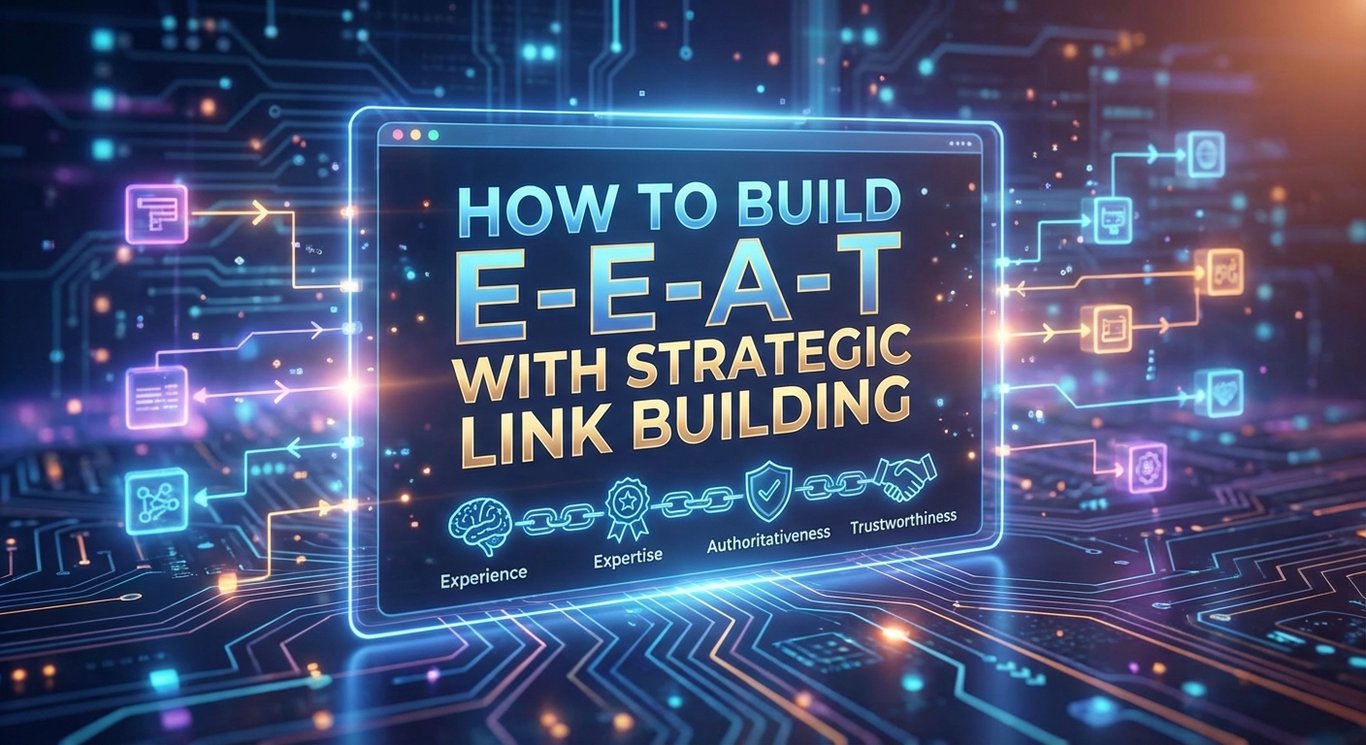
E-E-A-T stands for Experience, Expertise, Authoritativeness, and Trustworthiness, and it serves as the framework Google uses to evaluate the quality of content on the web. While it is not a direct ranking factor like page speed, it acts as a crucial signal to help search raters determine if a website provides value and is safe for users to visit. Experience refers to first-hand knowledge, Expertise looks at the creator's skills, Authoritativeness measures the reputation of the site, and Trustworthiness is about the accuracy and safety of the page. Understanding these four pillars is the first step toward creating a website that search engines love and users respect.
Strategic link building plays a massive role in strengthening each of these E-E-A-T pillars by acting as a digital vote of confidence from other websites. When a reputable site links to your content, it tells Google that your information is relevant, accurate, and worth sharing with a broader audience. For example, a link from a government health site to a medical blog instantly boosts the blog's Trustworthiness and Authoritativeness scores. Therefore, acquiring the right links is essential for proving to search algorithms that your site deserves a top spot in the search results.
There is a common misconception that E-E-A-T is solely about the words written on the page or the credentials of the author. While high-quality writing and expert authors are vital, they are often not enough on their own to compete in competitive niches without the support of external validation. You can write the best article in the world, but without links pointing to it, Google may struggle to verify your authority on the subject. 🔗 Recognizing that off-page signals are just as important as on-page content is the key to mastering modern SEO.
What Is Strategic Link Building?
Strategic link building is the process of acquiring hyperlinks from other websites to your own using ethical, value-driven methods rather than spammy shortcuts. Unlike "black-hat" tactics that involve buying links or using automated programs to spam comments, strategic building focuses on earning links because your content is genuinely useful. This approach ensures that your website remains safe from Google penalties while building a sustainable foundation for growth. It is about playing the long game to build a reputation that lasts.
The key elements that make link building "strategic" are relevance, quality, and context, which are far more important than just getting a high number of links. A single link from a website that is highly relevant to your industry carries much more weight for E-E-A-T than dozens of links from unrelated or low-quality sites. Context is also critical; a link placed naturally within a helpful paragraph is worth more than a link hidden in a footer. By focusing on these quality markers, you ensure every link you build directly supports your site's authority and trustworthiness. 🏗️
Why Internal Linking Boosts E-E-A-T Signals
Building a Pillar-Cluster Content Model
The pillar-cluster strategy is a powerful way to organize your website's content by creating a "topical map" that covers a subject from every angle. In this model, you create a comprehensive "pillar" page that covers a broad topic, and then you support it with several "cluster" pages that dive deep into specific sub-topics. This structure is like a wheel, where the pillar is the hub and the clusters are the spokes connecting everything together. Organizing content this way makes it incredibly easy for both users and search engines to navigate your site.
This interconnected structure significantly enhances your perceived expertise and authority because it shows search engines that you have covered a topic exhaustively. When Google crawls your site and sees a web of related content linked together, it understands that you are a true subject matter expert rather than just someone who wrote one lucky article. This depth of coverage signals that your site is a comprehensive resource. Consequently, a well-executed pillar-cluster model is one of the best ways to boost E-E-A-T internally.
Strategic Internal Link Placement Techniques
To maximize the power of your content, you must establish a clear page hierarchy that flows from your main pillar pages down to your specific cluster articles. Your pillar page should be the top-level authority, linking out to Tier 1 cluster pages, which can then link to even more specific Tier 2 pages if necessary. This hierarchy helps search engine bots understand which pages are the most important on your website. Establishing this order is crucial for passing authority to the right places.
"A powerful yet significantly underutilized strategy, internal linking, is crucial in showcasing your website’s E-E-A-T and boosting your SEO performance." -Search Engine Land
Once the hierarchy is set, you need to ensure that your link targets create a loop that connects the pillar to the clusters and back again. Every cluster page should link back to the main pillar page to reinforce the pillar's authority on the broad topic. Additionally, cluster pages should link to each other when relevant, creating a tight network of information that keeps users on your site longer. 🕸️ This system of cross-linking ensures that "link juice" flows evenly throughout your topic cluster.
Finally, paying attention to your anchor text—the clickable words in a link—is essential for both user experience and search engine understanding. Instead of using generic phrases like "click here," use descriptive anchor text that tells the user exactly what to expect, such as "learn more about SEO strategies." This helps Google understand the context of the linked page and confirms the relevance of the connection. Good anchor text improves accessibility and strengthens the semantic relationship between your pages.
Leveraging External Links from Authoritative Sources
When it comes to building E-E-A-T, the quality of the websites linking to you matters far more than the sheer quantity of backlinks you collect. A backlink from a high-E-E-A-T site, such as a university, a major news outlet, or a recognized industry leader, acts as a powerful endorsement of your content. Google views these links as "trust transfers," assuming that if a trusted site links to you, your site must also be trustworthy. Prioritizing these high-value connections is the smartest way to move the needle on your rankings.
Relevant, high-authority links are the strongest signals of trustworthiness you can send to Google's algorithm. If you run a financial advice blog, a link from a major bank or a financial news organization signals that your advice is vetted and legitimate. This relevance is key; a link from a popular gardening site won't help a finance blog nearly as much because the topical alignment isn't there. Therefore, relevance combined with authority creates the ultimate trust signal.
To find the best opportunities, you need a strategy for evaluating link prospects based on their alignment with E-E-A-T principles. Look for sites that publish high-quality content, have clear editorial standards, and disclose their authors' credentials. Avoid sites that accept any guest post without review or have a history of selling links, as these can actually harm your reputation. 🕵️♀️ Thoroughly vetting your prospects ensures that every external link you earn contributes positively to your site's standing.
"Enhanced expertise: In-depth pillar pages and informative cluster pages showcase your comprehensive understanding of the chosen topic, solidifying your position as an expert to users and search engines." -Search Engine Land
Creating Link-Worthy Content Aligned with E-E-A-T
Primary Data and Research Assets
One of the most effective ways to attract natural backlinks is to create content based on original surveys, case studies, or data analysis. Other writers and journalists are always looking for statistics to support their own articles, and if you are the source of that data, they will link to you. This type of content provides unique value that cannot be found anywhere else on the web. Creating primary data assets turns your site into a go-to resource for your industry.
For example, a marketing agency might conduct a survey on the latest social media trends and publish the results in a detailed report with charts and graphs. When other blogs write about social media trends, they will cite this report as proof of their claims, generating high-quality backlinks naturally. This demonstrates deep expertise and experience, as it shows you are actively researching and contributing to your field. 📊 Being the source of truth is a surefire way to build authority.
Thought Leadership Pieces
Thought leadership content, such as opinion pieces or predictions written by your company's CEO or senior experts, is excellent for building the "Expertise" and "Experience" components of E-E-A-T. These articles should offer unique perspectives, challenge industry norms, or provide insights that only someone with years of experience could offer. By putting a face and a voice to your content, you humanize your brand and build a deeper connection with your audience. This personal touch makes your content more shareable and linkable.
To fully capitalize on thought leadership, it is critical to highlight the author's credentials to meet E-E-A-T standards explicitly. Ensure that every article has an author bio that lists their job title, years of experience, degrees, and any other relevant qualifications. This transparency helps Google and readers verify that the person writing the content actually knows what they are talking about. showcasing your team's qualifications validates the authority of the content itself.

Ethical Outreach and Relationship Building for Links
Building links ethically often involves reaching out to other humans and forming genuine professional relationships through guest posting, collaborations, and partnerships. Instead of cold-emailing hundreds of people with a generic template, try to connect with influencers or editors in your niche by offering value first, such as sharing their content or leaving thoughtful comments. Collaborating on a webinar or a podcast is another great way to get a link while also accessing a new audience. 🤝 Real relationships lead to the most natural and sustainable links.
"Focusing on E-E-A-T naturally leads to ethical link building. High-quality content that demonstrates E-E-A-T is more likely to attract natural backlinks from reputable sources." -Lithium SEO
Another effective tactic is to secure quotes, testimonials, or co-authored content, which requires less effort than a full guest post but still builds authority. You can offer a quote to a journalist using services like HARO (Help A Reporter Out) or write a testimonial for a software tool your business uses, which they might publish on their homepage with a link back to you. These small wins add up and often come from high-authority domains. Being helpful to others is a great way to help yourself.
While it is smart to use tools to streamline the outreach process, you must maintain white-hat practices to protect your site's integrity. Tools can help you find email addresses or track who you have contacted, but the messages you send should always be personalized and relevant to the recipient. Avoid automated mass-spamming, as this annoys editors and can get your domain blacklisted. Using technology to assist, not replace, human connection is the golden rule of ethical outreach.
Measuring and Optimizing Your Link Building Efforts
To ensure your strategy is working, you need to track key metrics like link quality, relevance scores, and the direct impact on your organic rankings. Don't just look at the total number of backlinks; analyze the Domain Authority (DA) or Domain Rating (DR) of the sites linking to you to ensure they are reputable. Most importantly, watch your keyword rankings for the pages you are building links to; if they are climbing, your E-E-A-T signals are likely improving. Monitoring these metrics helps you understand the ROI of your efforts.
Regularly auditing your link profile using SEO tools is essential for refining your strategy and maintaining a healthy website. Tools like Ahrefs, SEMrush, or Moz can help you identify if you have gained any toxic links that need to be disavowed or if you have lost valuable links that need to be reclaimed. Based on this data, you can pivot your strategy, focusing more on the tactics that are yielding the best high-quality links. Continuous optimization ensures your link building remains effective over time. 📈
Common Pitfalls to Avoid in E-E-A-T Link Building
One of the biggest risks in link building is acquiring low-quality or irrelevant links, which can actually harm your site's Trustworthiness. Links from "link farms," gambling sites, or completely unrelated directories look suspicious to Google and can trigger manual actions or algorithmic penalties. It is better to have zero links than to have ten links that signal to Google that you are trying to cheat the system. Protecting your site's reputation requires constant vigilance against bad neighborhoods.
"With the EEAT update, the quality of the links matters more than the number. Link building services can have a greater impact when connected to a reputable, high-authority site rather than multiple links from low-quality sources." -World Business Outlook
Another common mistake is overlooking the power of internal linking while focusing entirely on getting external backlinks. You might spend months earning a great link from a major publication, but if that link points to a page that is isolated from the rest of your site, the value stops there. Failing to distribute that authority to your other important pages wastes the potential of your hard-earned backlinks. A balanced approach uses external links to bring authority in and internal links to spread it around.
Finally, ignoring ongoing content updates and relationship maintenance can cause your E-E-A-T to decay over time. Content that was accurate two years ago might be outdated today, and broken links provide a terrible user experience that signals a lack of maintenance. Similarly, if you don't keep in touch with your industry contacts, those link opportunities will dry up. Consistency in both content freshness and networking is vital for long-term success. 📉

Case Studies: Successful E-E-A-T Link Building Campaigns
Let's look at real-world examples, such as major health and finance websites like Healthline or NerdWallet, which have mastered the art of E-E-A-T link building. These sites use a rigorous pillar-cluster model, ensuring every medical condition or financial product is covered in depth and reviewed by qualified experts. They actively outreach to medical journals and financial institutions to secure citations, creating a fortress of authority that is hard to beat. Analyzing these giants reveals that structure and expert verification are their secret weapons.
The results of these campaigns are measurable and impressive, often showing massive growth in organic traffic and dominance in search rankings for high-value keywords. By consistently applying these strategies, these sites have seen their "trust" scores skyrocket, allowing them to rank for sensitive topics that Google guards closely (known as YMYL or "Your Money or Your Life" topics). The key lesson here is that investing in E-E-A-T is not a quick fix but a reliable driver of sustainable growth. 🚀
Future-Proofing Your Strategy Post-Google Updates
Google's algorithms are constantly evolving, but the core principle of E-E-A-T is likely to remain a permanent fixture in how search engines judge quality. To future-proof your strategy, you must stay adaptable and ready to pivot as guidelines for what constitutes "expertise" or "experience" become more refined. Instead of chasing the latest loophole, focus on the intent behind the updates: delivering the best possible answer to the user. Adaptability is the hallmark of a resilient SEO strategy.
The best long-term approach is to focus relentlessly on "people-first" content that genuinely helps your audience, rather than content designed solely to rank. If you create helpful, accurate, and engaging content, other sites will naturally want to link to you, and Google will want to rank you. Sustainable linking is about aligning your goals with Google's goal of organizing the world's information. 🌟 Keeping the user at the center of your strategy ensures you win regardless of algorithm changes.
FAQ
What is the difference between internal and external linking for E-E-A-T?
External linking involves getting other sites to link to you, which builds authority and trust from the outside. Internal linking connects your own pages, which helps demonstrate your expertise and organizes your content for users and bots.
How do I identify high-quality link prospects that boost E-E-A-T?
Look for websites that have high topical relevance to your niche, a good reputation, and real human authors. Avoid sites with spammy content, excessive ads, or no clear editorial standards.
Can small websites build E-E-A-T through strategic link building?
Absolutely! Small sites can build E-E-A-T by focusing on a specific niche and earning links from other respected sites in that small community. You don't need to be a giant corporation to be an expert in a specific field.
How long does it take to see E-E-A-T improvements from link building?
SEO is a long-term game, and E-E-A-T improvements can take several months to reflect in rankings. It takes time for Google to crawl the new links and re-evaluate your site's trustworthiness.
Is paid link building compatible with E-E-A-T principles?
Generally, buying links is against Google's guidelines and can hurt your E-E-A-T if caught. It is much safer and more effective to focus on earning links through high-quality content and genuine outreach.
Conclusion
Building E-E-A-T is not a single task but a holistic process that connects your content structure, internal linking, and external outreach into one cohesive strategy. We have explored how defining your expertise through pillar pages, validating that expertise with external backlinks, and maintaining ethical standards all work together to signal quality to search engines. It is the combination of these elements—not one in isolation—that builds a website capable of weathering algorithm updates and ranking consistently high. Everything is connected in the world of SEO.
The key takeaways to remember are that quality always beats quantity, and genuine relationships are worth more than automated spam. By focusing on topical authority through the pillar-cluster model and creating original research assets, you give people a reason to link to you naturally. Remember that E-E-A-T is ultimately about trust; if you build a site that users trust, search engines will follow suit. 💡 Shift your mindset from "getting links" to "earning reputation."
Now it is time to take action. Start by auditing your current link profile and content hierarchy today to see where your gaps are. Then, challenge yourself to implement one strategic internal linking update this week and send personalized outreach emails to three relevant, authoritative sites to begin building your E-E-A-T foundation for lasting SEO success.