1. What the Linkable Asset Flywheel Is and Why It Works
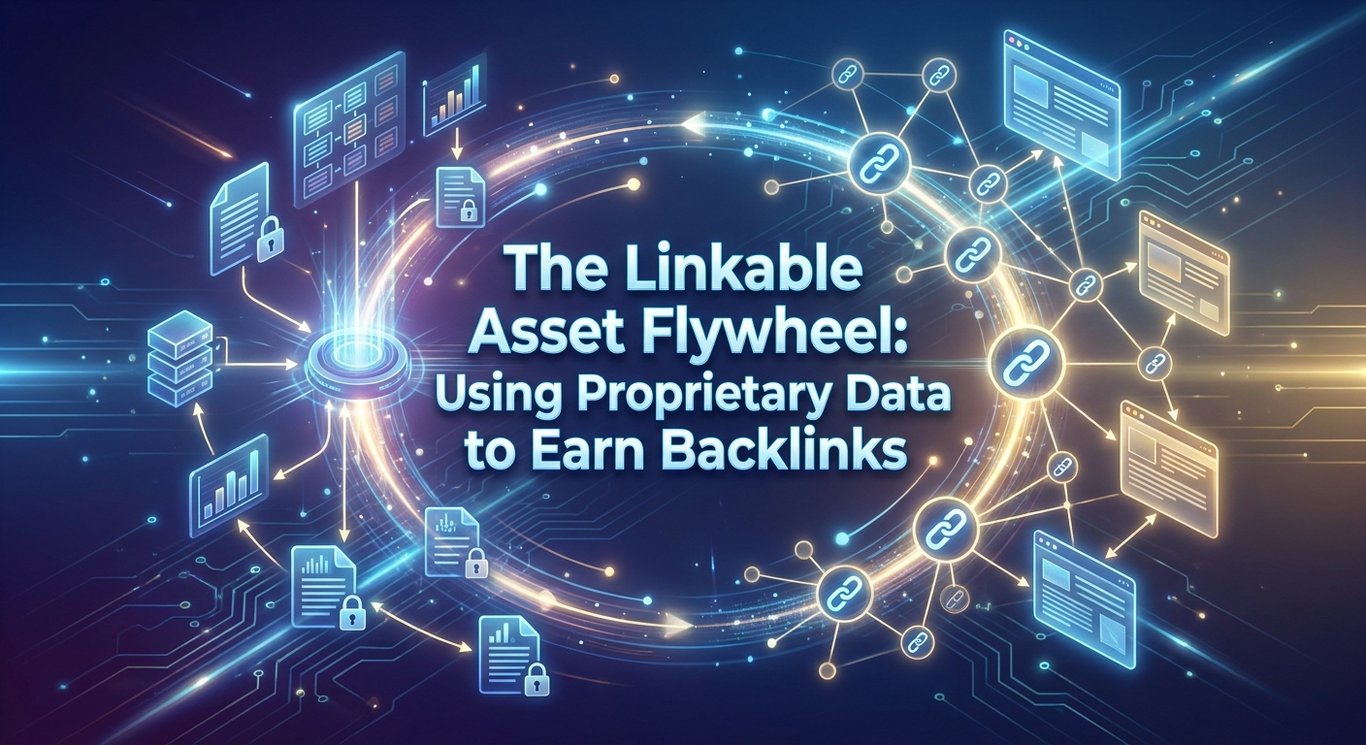
The linkable asset flywheel is one of the most powerful concepts in modern SEO, and yet most brands still haven't fully figured out how to use it. At its core, the flywheel is a self-reinforcing cycle: you create one strong, well-researched asset, that asset earns initial backlinks, those backlinks boost your visibility in search results and across the web, and that increased visibility draws even more citations over time — often without any additional outreach. Think of it less like a one-time campaign and more like a machine that keeps spinning on its own momentum. 🔄 The first push is the hardest, but once it's moving, the compounding effects are genuinely impressive.
What makes the flywheel model so different from traditional link building is that it isn't a one-off effort. Most link building campaigns have a clear start and end date — you reach out to 50 websites, earn a handful of links, and then you're done. The flywheel, by contrast, is designed for repeatability and long-term authority growth. Each asset you create adds to your domain's credibility, and each new round of data you publish benefits from the trust you've already built. Over time, your brand becomes a go-to source in your niche, and journalists and bloggers start citing you simply because they know you produce reliable, original information. That's a very different position to be in than constantly chasing links one at a time.
The engine that powers the flywheel is proprietary data — information that only you have, or that you've gathered and analyzed in a way nobody else has. Original data is more naturally citeable than generic content because it gives writers something they can't find anywhere else. When a journalist needs a statistic to support a story, they need a source. If your brand publishes the only survey on a particular topic, you become the default citation. Generic blog posts, no matter how well-written, don't create that kind of citation demand. Proprietary data does, and that's exactly why it sits at the heart of this entire strategy. 📊
2. Why Proprietary Data Earns More Backlinks Than Generic Content
Original data has a natural citation advantage that generic content simply cannot replicate. When you conduct a survey, analyze your platform's usage patterns, or compile a benchmark study from first-hand sources, you're producing something the internet doesn't already have. Journalists, researchers, analysts, and bloggers constantly need statistics to support their arguments, and they need to link to wherever those statistics come from. If your brand is the original source, every article that uses your data has to link back to you. That's a fundamentally different link-earning dynamic than trying to produce a slightly better version of something that already exists. The citation advantage of original data is structural, not just stylistic.
Of course, not all data is equally link-worthy. The data that earns the most backlinks tends to share a few key traits: novelty, relevance, clarity, and usefulness. Novelty means the findings reveal something people didn't already know or confirm something they suspected but couldn't prove. Relevance means the topic matters to the audience that journalists and bloggers are writing for. Clarity means the findings are easy to understand and quote without needing a statistics degree. And usefulness means the data actually helps someone — a writer crafting a trend piece, an analyst building a report, or a marketer trying to make a business case. When your data checks all four boxes, it becomes genuinely easy to cite, and that's when the links start arriving. ✅
Certain asset formats tend to attract more backlinks than others, and it's worth knowing which ones before you invest time in building them. Research reports with clear headline findings are consistently strong performers. Interactive tools, like calculators or benchmarking quizzes, earn links because they provide ongoing utility. Industry rankings and benchmark reports get cited year after year, especially if you refresh them annually. Charts and data visualizations get embedded in articles, which often means a link back to the original source. Salary surveys, trend reports, and "state of the industry" studies are perennial favorites among journalists who cover specific verticals. The common thread across all of these formats is that they give someone else a reason to reference you — and that reason is built into the asset itself.
3. How to Find Topics That Deserve Proprietary Research
Finding the right topic for your proprietary research asset is arguably more important than the research itself. A well-executed study on a topic nobody cares about won't earn many links, no matter how rigorous the methodology. The best place to start is close to home: your customers. What questions do they ask on sales calls? What problems come up repeatedly in support tickets? What do people search for before landing on your site? These signals tell you where genuine curiosity exists, and genuine curiosity is exactly where citation demand lives. SERP analysis is also incredibly useful here — if the top-ranking pages for a topic are all citing the same old study from five years ago, that's a clear signal that fresh, original research would be welcomed. 🔍
Beyond your own customer data, you can identify topics with strong citation demand by paying attention to how journalists and bloggers already cover your industry. When writers publish articles about your niche, what statistics do they reach for? What do they say things like "according to a recent study" without being able to link to anything specific? Those gaps are golden opportunities. Tools like BuzzSumo, Ahrefs Content Explorer, and even a simple Google News search can show you which topics are generating consistent coverage, meaning there's already a pipeline of writers who would happily cite a strong data source if one existed. You're not creating demand from scratch — you're positioning yourself to capture demand that's already there.
"A linkable asset is a specific type of content — a page, tool, or resource — that is deliberately built to attract backlinks because it offers something genuinely valuable, original, and easy to cite." -NicheRanker
Once you've identified a potential topic, it's worth stress-testing it against two criteria before committing to the research. First, is it broad enough to attract links from multiple types of publications? A topic that only one niche blog covers isn't going to power a flywheel. Second, is it specific enough to stand out? "Social media trends" is too vague to be memorable or citable. "How B2B SaaS companies are using LinkedIn video in 2025" is specific enough to attract a defined audience while still being relevant to a wide range of writers covering marketing, SaaS, and social media. The sweet spot between broad and specific is where the most powerful linkable assets live, and finding it before you start collecting data will save you a lot of time and effort down the road.
4. Data Sources You Can Use to Build a Linkable Asset Flywheel
The most valuable data you can use is data you already own. First-party sources are powerful precisely because they're exclusive to you — no competitor can publish the same findings because they don't have access to your data. Product telemetry, for example, can reveal fascinating usage patterns that the broader industry would find valuable. CRM data can show trends in customer behavior, deal cycles, or churn that are genuinely insightful. User behavior data from your platform can surface benchmarks that other companies in your space would love to compare themselves against. Customer surveys are another excellent first-party source — if you have a sizable customer base, a well-designed survey can produce findings that are both statistically meaningful and highly relevant to your industry. 💡
If your first-party data is limited, second-party and third-party sources can fill the gaps. Second-party data comes from partners — another company shares their data with you in exchange for something mutually beneficial, like co-authoring a joint report. Third-party sources include public datasets, government databases, academic research, and industry association data. The U.S. Bureau of Labor Statistics, Census Bureau, and various government health and financial agencies publish enormous amounts of data that most brands never think to analyze for their own linkable assets. The key with third-party data is to add genuine analytical value — don't just republish what already exists, but slice it, combine it, or contextualize it in a way that produces new insights. That's what makes it worth citing.
Combining multiple data sources into a single asset is often the most effective approach, because it produces richer findings than any one source could provide on its own. For example, you might combine your own customer survey data with publicly available government statistics and a secondary dataset from a partner to create a comprehensive industry benchmark report. The result is more authoritative than any of the individual pieces. However, credibility and transparency are non-negotiable when you take this approach. Every source needs to be clearly attributed, your methodology needs to be explained, and any limitations in the data should be acknowledged honestly. Journalists are skeptical by nature, and a single credibility red flag can be enough to make them pass on citing your work entirely. Be upfront, and your asset will be trusted. 🤝
5. How to Turn Proprietary Data Into a Citation-Worthy Asset
Even the best data in the world won't earn links if it's poorly packaged. A strong data asset has a clear, logical structure that makes it easy for journalists and bloggers to find what they need quickly. It starts with a headline finding — the single most surprising or important thing your data reveals. From there, it walks through the methodology so readers understand how the data was collected and why it's credible. Key charts and visualizations bring the findings to life, and clear takeaways explain what the data means in practical terms. Downloadable summaries, like a PDF version of the key findings, make it even easier for people to reference and share the asset. Think of the structure as a service to the reader — the less work they have to do to understand and use your data, the more likely they are to cite it. 📋
Data visualization deserves its own spotlight because it has an outsized impact on whether publishers actually pick up your findings. A well-designed chart can communicate a complex finding in seconds, and that's exactly what a busy journalist needs. Simple, clean visuals work better than elaborate, multi-layered graphics — if someone has to spend more than a few seconds figuring out what a chart is saying, they'll move on. Bar charts, line graphs, and simple percentage breakdowns are almost always more effective than pie charts or complex scatter plots for this purpose. When your charts are clear and easy to embed, they become shareable assets in their own right, and each embed typically comes with a link back to your original source. That's free link building built right into your design choices.
"A backlink engine powered by proprietary data is a systematic approach to earning links where you create original, brand-owned data assets — like surveys, studies, or unique datasets — that naturally attract citations from other websites." -NicheRanker
How you name and frame your asset matters more than most people realize. A report called "2025 State of B2B Email Marketing" is far more citable than one called "Our Email Marketing Research." The former sounds like an industry resource; the latter sounds like a marketing brochure. Strong naming conventions give the asset an identity that's easy to reference in an article — writers can say "according to the 2025 State of B2B Email Marketing report" and it sounds authoritative. Framing matters too: presenting your findings as industry insights rather than brand promotion makes the asset feel neutral and trustworthy, which is exactly what journalists need before they'll stake their credibility on your data. 🏷️
Credibility signals are the final piece of the packaging puzzle, and they're often what separates assets that earn links from those that don't. Journalists and editors are trained to evaluate sources critically, and they'll look for specific signals before deciding whether to cite your work. Sample size is one of the most important — a survey of 50 people carries much less weight than one of 500 or 5,000. Methodology notes should explain how respondents were recruited, how the data was analyzed, and what the margin of error is. Date ranges tell readers how current the data is. Source attribution shows where any third-party data came from. These details might feel like fine print, but to a journalist deciding whether to cite your study in a major publication, they're the difference between "this is credible" and "I'd better find another source."

6. Distribution Strategy: How to Launch the Flywheel
Even the most exceptional linkable asset needs a strong launch push to get the flywheel moving. The idea that great content automatically finds its audience is a comforting myth, but it's still a myth. Without intentional promotion, even genuinely original and valuable research can sit unnoticed for months. The launch phase is your opportunity to place the asset in front of the people most likely to cite it — journalists, bloggers, newsletter editors, and industry analysts who are actively looking for data to support their work. Think of the initial distribution effort as lighting the fuse. Once enough people know the asset exists and start citing it, the organic momentum begins to build on its own. But you have to light that fuse first. 🚀
Outreach to journalists, bloggers, niche publishers, and industry newsletters is the most direct way to generate early links. The key to effective outreach at this stage is angle-specific pitching — meaning you don't send the same generic email to everyone. Instead, you identify the specific angle that would make the data relevant to each publication's audience and lead with that. A tech journalist gets a pitch about the technology implications of your findings. A business writer gets a pitch about the economic or strategic angle. A niche industry blogger gets a pitch that speaks directly to the concerns of their specific readership. When the pitch feels like it was written specifically for the recipient, response rates go up dramatically, and that translates directly into more first-wave links.
Owned-channel distribution runs parallel to outreach and shouldn't be underestimated. Your email list is one of the most valuable assets you have for launching a new piece of research — if your subscribers are in your target industry, getting the asset in front of them means it reaches people who are already engaged with your brand and likely to share it within their own networks. Social media, particularly LinkedIn for B2B topics, can amplify the reach significantly. Internal communities, Slack groups, industry forums, and partner newsletters are also excellent channels for getting early traction. The goal at this stage is to maximize the number of relevant eyeballs on the asset in the first few weeks after launch, because early momentum tends to compound. 📣
Building a segmented outreach list before you launch is one of the highest-leverage things you can do to improve distribution results. Not every journalist or blogger is equally likely to cite your specific asset, and sending to a poorly targeted list wastes time and can actually hurt your sender reputation. Instead, segment your list by topic relevance (do they cover this subject?), publication style (do they cite data and statistics in their articles?), and likely citation intent (are they the kind of writer who links to original research?). Tools like Hunter.io, Ahrefs Content Explorer, and even manual Google searches can help you build a highly targeted list of contacts who are genuinely likely to find your asset useful. A smaller, well-targeted list will almost always outperform a large, generic one.
"One strong placement creates visibility, that visibility produces citations nobody had to pitch for, and those citations make the next placement easier to earn." -LinkyJuice
7. Outreach Tactics That Help the First Links Arrive Faster
Personalized pitching is the single biggest factor in whether your outreach generates links quickly. One-size-fits-all emails are easy to spot and easy to ignore — journalists receive dozens of pitches every day, and anything that feels templated gets deleted in seconds. Effective personalization goes beyond just inserting someone's name. It means referencing a specific article they wrote, explaining why your data is directly relevant to a topic they've covered recently, and making it obvious that you actually read their work before reaching out. Angle matching — aligning your pitch to the specific editorial angle the journalist tends to take — is what transforms a cold email into something that feels genuinely useful. That shift in perception is what gets replies. ✉️
Identifying the right people to contact is just as important as crafting the right message. The most efficient approach is to find journalists, editors, and bloggers who have already demonstrated a pattern of citing data and statistics in their articles. Ahrefs and SEMrush can show you which sites are already linking to data-heavy content in your niche. A quick scan of bylines on relevant articles can reveal which writers are most likely to use your research as a source. Editors of industry newsletters are often overlooked but highly valuable — a single mention in a well-read newsletter can trigger a wave of secondary citations from the newsletter's audience. Focus your outreach energy on people who already have a history of linking to research, because they've already shown you they're willing to do it again.
One of the most effective reframes in link-building outreach is positioning your asset as a source upgrade rather than a promotional ask. Instead of saying "we published this report and thought you might like to link to it," try something like "I noticed your article on X cites a 2021 study — we just published 2025 data on the same topic that might give your readers more current information." That framing makes the pitch feel like a favor, not a request. You're offering the journalist something that makes their existing content better, which is a much easier yes than asking them to link to something purely for your benefit. This approach consistently outperforms traditional promotional outreach, and it's a tactic that scales well across large outreach lists. 🎯
8. Internal Linking and Site Architecture for Compounding SEO Value
A linkable asset that earns dozens of backlinks is a powerful SEO asset — but only if that authority is strategically distributed across your site through internal linking. The asset page itself will accumulate PageRank as links come in, and internal links allow you to pass a portion of that authority to other pages on your site. The key is to link naturally to relevant commercial or supporting pages from within the asset, without making the asset feel like a sales pitch. For example, a research report on email marketing trends might naturally link to your email marketing platform's features page, or to a detailed guide on implementing one of the report's key findings. The link should feel like a helpful next step for the reader, not an advertisement. 🔗
Passing authority from linkable assets to money pages is one of the most underutilized tactics in SEO. When an asset earns a significant number of referring domains, it becomes one of the most authoritative pages on your site. Strategic internal links from that asset to your product pages, service pages, or key landing pages can meaningfully improve those pages' rankings over time. The more authoritative the asset, the more valuable those internal links become. This is why it's worth thinking about internal linking architecture before you publish the asset, not as an afterthought. Identify which commercial pages you most want to boost, and plan how to link to them naturally from within the asset's content.
Hub-and-spoke site architecture is the most effective way to keep the flywheel connected across your entire site. In this model, the linkable asset serves as a hub — a high-authority, heavily linked page that sits at the center of a topic cluster. From the hub, internal links radiate outward to spoke pages that cover related subtopics in more depth. Those spoke pages link back to the hub, reinforcing its authority. Over time, this creates a tightly interconnected web of pages that collectively rank for a wide range of related keywords. New linkable assets can be added to the cluster, each one strengthening the overall architecture. This is how the flywheel scales from a single asset into a full-blown content authority engine. 🕸️
"The most effective white-hat approach pairs two complementary strategies: creating genuinely valuable content that journalists and editors want to reference, and building relationships with the people who can amplify it." -Asset Linkable
9. How to Measure Whether the Flywheel Is Working
Measuring the effectiveness of a linkable asset flywheel requires tracking a combination of link-specific and broader SEO metrics. The most direct indicators are referring domains and link quality — how many unique websites are linking to the asset, and are those sites authoritative and relevant? Tools like Ahrefs, Moz, or SEMrush make this straightforward to track. Beyond raw link counts, you'll want to monitor organic rankings for the asset page itself and for the commercial pages it links to internally. Organic traffic to the asset is another useful signal, as is branded search volume — if people are searching for your report by name, that's a strong sign the flywheel is building real brand awareness. 📈
One of the most telling indicators of flywheel momentum is whether the asset starts earning links passively after the initial outreach phase. In the first few weeks, most links will come directly from your outreach efforts. But if the flywheel is working, you'll start to see new referring domains appearing without any corresponding outreach activity — writers who discovered the asset organically, were referred to it by a colleague, or found it through a previous citation. Tracking this passive link acquisition over time tells you whether the asset has achieved true compounding momentum. You can also measure outreach efficiency: are you getting more links per email sent as your asset gains credibility? If yes, the flywheel is working. 🎉
Ultimately, the flywheel needs to connect to business outcomes, not just SEO metrics. Tracking downstream business impact means looking at whether organic traffic from the asset is converting into leads, email subscribers, or demo requests. Assisted conversion data in Google Analytics or your CRM can show you how often the asset appears in the conversion path even when it isn't the last touchpoint. Pipeline influenced by organic traffic — meaning deals where a prospect engaged with your research content at some point before becoming a customer — is one of the most compelling metrics to share with leadership because it ties SEO directly to revenue. When you can show that the flywheel is driving real business results, it's much easier to justify continued investment in building more assets. 💰

10. Common Mistakes That Prevent Linkable Assets From Earning Links
The most common reason linkable assets fail to earn links is that they're too vague, too weak, or too poorly formatted to be citable. A research report with a sample size of 30 people, no methodology section, and findings that confirm what everyone already knew is not going to get cited by serious journalists or analysts. Similarly, assets that are buried in dense walls of text with no clear headline finding make it hard for a busy writer to quickly extract the key statistic they need. Weak data and poor formatting are often the result of rushing the asset to publication, treating it like a regular blog post rather than the high-value resource it needs to be. The bar for a linkable asset is genuinely higher than for standard content, and it's worth taking the time to meet it. ⚠️
Even well-crafted assets fail when the launch is poorly executed. The most common launch mistakes are: having no outreach list prepared before publication, having no structured distribution plan, and doing no follow-up promotion after the initial announcement. Many brands publish a research report, share it once on social media, send one email to their list, and then wonder why the links aren't coming in. Effective flywheel launches require a multi-week promotion plan that includes multiple rounds of outreach, ongoing social sharing, partner amplification, and follow-up emails to contacts who didn't respond the first time. The assets that earn the most links aren't always the best ones — they're often the ones with the most persistent and organized launch campaigns behind them.
Stale data is one of the most overlooked threats to long-term flywheel performance. A research report that was groundbreaking in 2022 becomes less citable every year as the data ages. Journalists and editors are increasingly aware of data freshness, and many will explicitly avoid citing statistics that are more than two or three years old. This is why refresh cycles are so important — updating your flagship assets annually with new data not only keeps them citable, it also gives you a reason to do another round of outreach and generate a new wave of links. Each annual refresh is essentially a new launch, and over several years, a well-maintained asset can accumulate links continuously rather than in a single burst. ♻️
11. Real-World Examples of Linkable Asset Flywheels
Across industries, certain asset types have proven themselves as consistent link magnets. Industry benchmark reports — like an annual study on average customer acquisition costs in a specific vertical — earn links year after year because they give practitioners a credible number to reference when making business cases. Salary surveys are perennially popular because both job seekers and employers need current compensation data. Trend reports that identify emerging patterns in consumer behavior, technology adoption, or market dynamics get picked up by journalists writing forward-looking pieces. Calculators and interactive tools earn links because they provide ongoing utility — a mortgage calculator, a carbon footprint estimator, or a marketing budget calculator can attract links for years after publication. The common thread is that all of these asset types serve a recurring need rather than a one-time curiosity. 🛠️
One of the most exciting dynamics of the flywheel model is how a single strong placement can trigger a cascade of secondary citations. When a major publication cites your research, other writers who read that article often follow the citation back to your original source and cite it in their own work. This secondary citation effect can multiply the link impact of a single high-profile placement by a factor of five or ten over the following months. The first placement is the hardest to earn, but it does more than just add one backlink — it puts your asset in front of a much larger audience of potential future citers. This is why targeting authoritative, widely-read publications for your initial outreach push is so strategically valuable. One link from the right place can set the whole flywheel spinning. 🌀
The flywheel model is adaptable enough to work across virtually every industry, though the specific asset formats that work best vary by sector. SaaS companies tend to do well with product usage benchmarks and "state of the industry" reports that speak to practitioners. E-commerce brands can leverage consumer behavior data and shopping trend reports that attract both industry press and mainstream media. Finance companies can build powerful assets around economic data, investment trends, or consumer debt statistics. Health and wellness brands can produce compelling research on behavior change, wellness habits, or population health trends. B2B service firms can publish research on business challenges, hiring trends, or operational benchmarks that speak directly to their target buyers. The underlying mechanics are the same regardless of industry — original data, clear packaging, strategic distribution, and consistent refreshes. 🌐
12. FAQ: Common Questions About The Linkable Asset Flywheel: Using Proprietary Data to Earn Backlinks
A linkable asset flywheel is a content strategy where you create original, data-backed assets — like research reports, benchmark studies, or interactive tools — that naturally attract backlinks over time. The "flywheel" part refers to the self-reinforcing cycle: each link the asset earns increases its visibility, which drives more citations, which earns more links, and so on. As for what kinds of proprietary data attract the most backlinks, the top performers are typically original survey data, platform usage benchmarks, industry salary or pricing data, trend reports with year-over-year comparisons, and any dataset that fills a clear gap in publicly available information. The more specific, current, and surprising the findings, the more naturally citable the asset becomes. 🔑
Even a genuinely strong asset still needs outreach — typically a well-targeted initial push to get the first wave of links and visibility. Without that first spark, even excellent research can go unnoticed. However, a stronger asset does require less ongoing outreach over time because it earns links passively once it gains traction. To make journalists want to cite your data specifically, focus on three things: make the headline finding impossible to ignore, make the methodology transparent and credible, and make the data easy to extract and quote. As for update frequency, most successful data assets are refreshed annually — this keeps the data current, maintains its citability, and gives you a fresh outreach opportunity each year. Treat each annual refresh as a new launch, and the flywheel keeps compounding. 📅
Conclusion: Building a Repeatable Backlink Engine With Proprietary Data
The core takeaway from everything we've covered is straightforward: proprietary data works best when it's packaged as a clear, citeable asset and supported by intentional launch promotion. The data alone isn't enough — it needs to be structured so journalists can find the headline finding instantly, visualized so the key insights are immediately obvious, and framed as an industry resource rather than a brand promotion. And even the best-packaged asset needs a distribution strategy behind it, because the flywheel doesn't spin on its own. The combination of strong data, smart packaging, and persistent outreach is what creates the initial momentum that eventually becomes self-sustaining. When all three elements are in place, the results compound in a way that no one-off link building campaign can match. 🏆
Now it's your turn to build one. Start by identifying the single most valuable unanswered question in your niche — the one that your customers, your industry, and journalists covering your space are all hungry to have answered. Build a data-backed asset around that question, package it with a clear structure, credible methodology, and clean visualizations, and then launch it with a targeted outreach campaign. That's how you start your own Linkable Asset Flywheel: Using Proprietary Data to Earn Backlinks. Remember the key principles: original research earns citations, distribution creates the first spark, internal links spread authority across your site, and annual refreshes keep the flywheel compounding year after year. The brands that commit to this model don't just build backlinks — they build lasting authority that their competitors genuinely can't replicate. 🚀