Introduction: Why a funnel-based link strategy matters
Purpose and angle for the article
Most link-building strategies are built around one goal: get as many high-authority backlinks as possible. While that sounds reasonable on the surface, it often leads to a pile of links that do very little for actual business growth. The smarter approach is to treat backlink acquisition as a marketing activity — one that supports your goals at every stage of the buyer journey. Instead of chasing raw link volume, this article connects awareness, consideration, and conversion outcomes to specific link-building tactics so your efforts actually move the needle. 🎯
What readers will learn
In this guide, you'll get a clear walkthrough of the three funnel stages and how each one calls for a different kind of link-building approach. You'll learn how to choose the right pages to target at each stage, which content assets attract the best links, and how to measure whether your backlinks are actually contributing to traffic, leads, and revenue. By the end, you'll have a practical framework you can apply to your own strategy right away.
What is the link-building funnel?
Define the concept and its marketing purpose
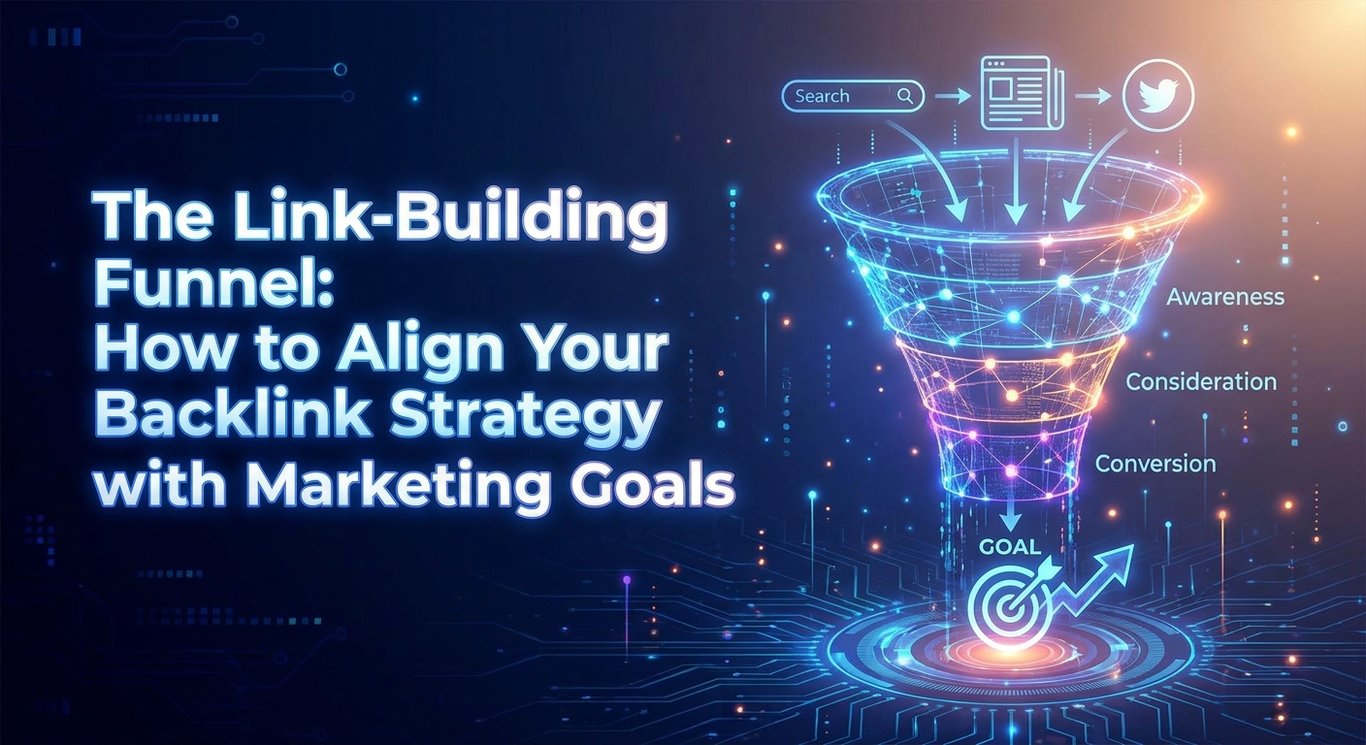
The link-building funnel is a strategic framework that aligns your backlink types, target pages, and outreach angles with where your potential customers are in the buying process. Think of it as matching the right link to the right moment. Traditional link building tends to focus almost entirely on authority metrics — domain rating, page authority, trust scores — without asking whether those links actually reach the right audience or support the right pages. The funnel-based approach flips that thinking by starting with the buyer journey and working backward to identify what kinds of links will actually help move people from discovery to decision. 🔄
Why it matters for modern SEO and demand generation
When your link-building strategy is aligned with the funnel, it does more than boost rankings — it improves topical authority, drives qualified traffic, and increases your conversion potential. Authoritative sources in the SEO space consistently emphasize that matching your content and links to the awareness, evaluation, and decision stages of the buyer journey is what separates effective campaigns from ones that just look good on a report. Demand generation isn't a separate job from SEO anymore; they work best when they're built together from the start.
How backlink strategy maps to the buyer journey
Top-of-funnel backlinks
At the top of the funnel, your audience is just becoming aware of a problem or need. They're searching for information, not solutions — which means the content that earns links here needs to be educational and genuinely useful. Think research posts, comprehensive guides, statistics pages, and explainer articles that answer broad questions in your niche. These assets attract links from bloggers, journalists, and publishers who are creating content for similar audiences. The goal at this stage isn't to sell anything — it's to get discovered by the right people and build topical relevance in your space. 📚
Middle- and bottom-funnel backlinks
As buyers move deeper into the funnel, they start evaluating options and comparing solutions. This is where comparison pages, solution pages, case studies, and product-focused content come in. These assets need links from referring domains that match the intent of someone who's getting close to making a decision. A link from a niche review site or an industry comparison platform carries far more value here than a generic blog mention, because it reaches people who are already in buying mode. These links help prospects move from evaluation to action — and that's exactly where the real revenue impact happens. 💡
How to align backlink goals with business objectives
Translate business goals into link-building KPIs
One of the biggest mistakes in link building is treating it as its own isolated activity with its own separate goals. Instead, your backlink KPIs should connect directly to what the business actually cares about — rankings for target keywords, organic traffic growth, qualified leads, conversion rates, share of voice, and ultimately revenue. Setting SMART-style goals (specific, measurable, achievable, relevant, and time-bound) is far more useful than saying "we want 50 new backlinks this quarter." A goal like "earn 10 links to our comparison page to improve rankings for [keyword] and increase trial sign-ups by 15%" gives your team something to actually work toward and measure. 📊
"Full-funnel link building is a strategic approach to acquiring backlinks that targets every stage of the marketing funnel, from awareness to retention." -Niche Ranker
Choose the right page targets for each objective
Not all pages deserve the same link-building attention, and prioritizing the wrong ones is a fast way to waste your budget. The pages you target should be chosen based on their intent, their profitability, and their role in the customer journey. If your goal is brand awareness and topical authority, cornerstone content and educational guides are your best bet. If you're trying to drive revenue, your commercial pages, service pages, and high-intent landing pages should be at the top of your outreach list. Matching page targets to objectives keeps your strategy focused and makes it much easier to measure real impact.
How to identify linkable assets by funnel stage
Top-funnel assets that attract natural links
At the awareness stage, the assets that earn the most natural links are the ones that provide genuine value to a broad audience. Data studies and original research tend to get cited heavily because they give other writers something authoritative to reference. Industry statistics pages, educational guides, and problem-solving explainers work in a similar way — they position your brand as a knowledgeable source while giving publishers a reason to link back to you. These assets are particularly effective at attracting links from informational and research-oriented publishers who are building content for readers in the early stages of discovery. 🔍
Conversion-focused assets that support revenue
Further down the funnel, your linkable assets need to do double duty — they should earn links AND support the conversion path. Comparison pages and alternatives pages are great examples because they naturally attract links from review sites, roundups, and industry directories while also capturing high-intent search traffic. Case studies, testimonials, and service pages built around specific outcomes can also earn links from partners, industry publications, and niche communities. When you design these assets, think about both the link-earning angle and the on-page experience — every visitor who lands on that page through a backlink should have a clear next step waiting for them.
"Before you buy or produce a single link, set measurable objectives: target rankings (top 3, top 10), organic traffic, conversions/leads, share of voice and — for GEO — citation frequency, AI share of voice and the quality of AI-driven traffic (often more qualified)." -Incremys
Content planning and editorial calendar alignment
Match linkable content to campaign timing
Timing is one of the most underrated factors in link-building success. When your linkable content is published in sync with product launches, seasonal campaigns, or major industry events, outreach becomes significantly easier because there's built-in relevance and urgency. A data report published right before a major industry conference, for example, is far more likely to get picked up by speakers, bloggers, and journalists covering that event. Aligning your link-building calendar with your broader marketing calendar means your outreach lands at the moment when editors and publishers are most interested in your topic. 📅
Use internal linking to move readers through the funnel
External backlinks bring people to your site, but internal links are what guide them through it. A well-structured internal linking strategy connects your educational top-of-funnel content to mid-funnel resources, and then points those readers toward conversion pages. This matters for two reasons: it helps distribute link authority across your site, and it gives users a natural path to follow based on where they are in their journey. Every piece of content you publish should have a clear next step built into it — whether that's a related guide, a comparison page, or a product demo — so that the traffic your backlinks send doesn't just bounce and disappear.

Outreach strategy for each funnel stage
Awareness-stage outreach tactics
When you're building links for top-of-funnel content, your outreach message needs to lead with value, not with your brand. Pitching data, trends, and educational resources to journalists, bloggers, and niche publishers works best when you frame the content as something genuinely useful to their audience. Nobody wants to link to something that reads like a sales pitch — they want to reference something that makes their own content better. Focus your messaging on topical relevance, the quality of your data, and the specific value your resource adds to their readers. Keep it conversational, keep it short, and make it easy for them to say yes. ✉️
"TOFU content needs topical authority links that build domain trust. MOFU content requires links from solution-aware sources (comparison sites, review platforms). BOFU content converts best with links from high-intent referral traffic - think industry directories and partner sites." -LinkedIn
Decision-stage outreach tactics
At the bottom of the funnel, your outreach strategy shifts from broad awareness to targeted placement. Partner links, industry directories, comparison sites, and review platforms are all valuable here because they reach people who are actively evaluating options. Strategic collaborations with complementary brands can also generate links that carry strong commercial intent. The goal with these placements isn't just a backlink — it's qualified referral traffic from people who are already close to making a purchase decision. That means you should be just as focused on the quality of the audience behind the link as you are on the authority of the domain. 🤝
How to evaluate link quality beyond authority metrics
Relevance, audience overlap, and traffic potential
Domain authority is a useful signal, but it shouldn't be the only thing you look at when evaluating a potential link source. Topical relevance matters just as much — a link from a niche site that covers your exact topic is often more valuable than one from a high-authority site with no connection to your industry. Audience overlap is another key factor: does the site's readership actually care about what you offer? And real traffic matters too. A site with a DR of 40 but 50,000 monthly visitors in your niche will likely send you more meaningful traffic than a DR 70 site that's mostly a ghost town. Always ask whether a link is likely to reach people who actually care about your offer. 🎯
Risk signals and prioritization criteria
Not every link opportunity is worth pursuing, and some can actually hurt you. Pay attention to where the link would be placed on the page — contextual links within editorial content are far more valuable than footer or sidebar links. Look at the site's editorial standards: does it publish quality content, or is it a link farm in disguise? Check the outbound link quality too — if a site links out to spammy or irrelevant pages, that's a red flag. Many expert resources in the SEO space consistently recommend prioritizing relevance and business impact over vanity metrics, and that advice holds up. A smaller list of high-quality, well-targeted links will almost always outperform a larger list of mediocre ones.
"When building backlinks, it’s best to focus on promoting the most relevant and highest quality content for the audience you’re trying to tap into." -Search Engine Land
How to measure ROI from funnel-aligned link building
Core performance metrics to track
If you're only measuring success by how many links you built or what the average domain rating is, you're missing the point entirely. The metrics that actually matter are the ones tied to business outcomes: keyword rankings, organic sessions, assisted conversions, leads generated, revenue contribution, and referral traffic quality. For each page you're building links to, you should be able to answer the question — did this link campaign help this page do its job better? That might mean ranking higher, converting more visitors, or generating more demo requests. Tracking at the page level, by funnel stage, gives you a much clearer picture of what's working. 📈
Reporting and iteration workflow
Effective link-building campaigns don't end when the links go live — they evolve based on what the data shows. Set up a regular reporting cadence where you review performance by page type, funnel stage, and campaign theme. If a top-of-funnel asset is earning links but not driving meaningful traffic, it might need a content refresh or better internal linking. If a commercial page isn't converting the referral traffic it's getting, the problem might be on-page rather than with the links themselves. Use these insights to update outreach targets, shift resources toward higher-performing campaigns, and continuously improve the quality of your content and targeting. 🔄
Common link-building mistakes that weaken funnel alignment
Over-optimizing for quantity or authority alone
One of the most common link-building traps is chasing high-DR links without asking whether they actually fit your audience or your goals. A link from a massive general news site might look impressive in a report, but if it sends zero relevant traffic and points to a page that has nothing to do with the site's content, it's not doing much for your business. Similarly, building hundreds of links to pages that don't support any real business objective is just noise. This kind of strategy creates the illusion of progress while delivering weak commercial impact — and it can actually make it harder to identify what's really working. 🚫
"Prioritize: Topical relevance over DR, Audience overlap over vanity metrics, Competitor validation over raw authority, Realistic acquisition opportunities over theoretical authority." -PressWhizz
Poor coordination between SEO and marketing teams
When SEO and marketing teams operate in silos, link-building campaigns often end up disconnected from the broader strategy. SEO might be building links to pages that marketing isn't promoting. Marketing might be running campaigns without any link-building support. Outreach messages might contradict the brand voice. These coordination failures lead to inconsistent messaging, missed timing opportunities, and results that are hard to measure because no one agreed on the goals upfront. Cross-team alignment — even just a shared content calendar and a regular sync — dramatically improves the quality of content creation, outreach, and measurement across the board. 🤝

Step-by-step process for building a funnel-aligned backlink strategy
Audit and map existing assets
Before you start any new outreach, take stock of what you already have. Pull your current backlink profile and look at which pages are earning links, which ones have strong content but few links, and which ones have links but aren't performing. Then map each page to a funnel stage — awareness, consideration, or decision — based on its content and intent. This exercise almost always reveals gaps: maybe your top-of-funnel content is well-linked but your commercial pages are barely on anyone's radar, or maybe you have great product pages with no supporting content to funnel traffic toward them. Those gaps are your starting point. 🗺️
Prioritize opportunities and create outreach lists
Once you know where your gaps are, it's time to build your prospect list. Start by identifying sites that are relevant to your niche, have real traffic, and publish the kind of content where your pages would naturally fit as a reference or resource. Competitor gap analysis is incredibly useful here — look at who's linking to your competitors but not to you, and figure out why. Then prioritize your outreach list based on relevance, audience overlap, and how linkable your content actually is for that specific prospect. Quality over quantity applies here just as much as it does to the links themselves. 📋
"Align Link-Building with Strategic Goals" -BacklinkBuilding.io
Launch, follow up, and refine the campaign
When you start reaching out, personalization is everything. A generic template sent to 500 sites will almost always underperform a thoughtful, personalized email sent to 50 well-chosen prospects. Reference specific content on their site, explain exactly why your resource adds value to their audience, and make it easy for them to act. Follow up once or twice if you don't hear back — most responses come after the second email. Once links go live, monitor their placement and track performance. Every campaign teaches you something: which angles resonated, which page types performed best, and where to focus next time. Feed that learning back into your content and targeting decisions, and your strategy gets sharper with every cycle. 🚀
How to adapt the strategy for B2B, SaaS, and service businesses
B2B and SaaS funnel considerations
For B2B and SaaS companies, the buying cycle is typically longer and involves more stakeholders — which means mid-funnel content and links carry extra weight. Educational assets like in-depth guides, webinars, and research reports help build trust during the long evaluation phase. Comparison pages and integration pages are particularly powerful because they address the specific questions buyers ask when they're narrowing down their options. Case studies with real numbers and outcomes are also strong link magnets in the B2B space because they provide social proof that other buyers actively seek out. Building a strong mid-funnel link presence is often what separates SaaS brands that generate consistent pipeline from those that struggle to convert their organic traffic. 💼
Local and service-business considerations
Local businesses and service providers have a slightly different playbook, but the funnel logic still applies. Service-location pages — think "plumber in Austin" or "marketing agency in Chicago" — need links from locally relevant sources like local news sites, business directories, and community organizations. Testimonial-driven content and case studies featuring local clients can earn links from partners and industry associations while also building trust with local searchers. Partnership links with complementary local businesses are another underused tactic that can drive both visibility and direct referrals. The goal for these businesses is to use backlinks to support both search engine rankings and real-world lead generation — and those two things work together more often than people realize. 📍
FAQ: Common questions about the link-building funnel
What is the difference between link building and funnel-based link building?
Traditional link building is often focused on acquiring backlinks broadly — targeting high-authority sites and accumulating as many links as possible without much thought for where those links point or who they reach. Funnel-based link building takes a more intentional approach by tying each link to a specific stage of the buyer journey and a specific marketing objective. Instead of asking "how do we get more links?" it asks "what kind of links do we need, for which pages, to reach which audience, and to support which goal?" That shift in thinking is what makes the difference between a link strategy that looks good on paper and one that actually drives business results. 🧠
Which pages should get the most backlinks?
There's no one-size-fits-all answer here — it depends entirely on your business goals and where you have the most to gain. Top-of-funnel content like guides and research posts should earn visibility links that build topical authority and drive broad awareness. Commercial pages — product pages, service pages, and comparison pages — need conversion-supporting links from relevant, high-intent sources. In practice, most businesses should be building links to both types of pages simultaneously, with the balance shifting based on what the data shows about where traffic and conversions are falling short. Intent and business value should always guide prioritization over vanity metrics.
How many backlinks do I need for a page to rank?
This is one of the most common questions in SEO, and honestly, there's no universal number. The right answer depends on how competitive your target keyword is, what the search intent looks like, how strong your existing domain authority is, and how good your content is compared to what's already ranking. Some pages rank with a handful of strong, relevant links. Others in highly competitive niches need dozens. Rather than chasing a specific number, focus on consistently earning high-quality, relevant links while making sure your content genuinely deserves to rank — that combination will serve you far better than any arbitrary link count target. 🔢
Are high-authority links always better than relevant links?
Not necessarily — and this is a really important distinction to understand. A high-authority link from a site that has nothing to do with your industry might give you a small boost in authority, but it's unlikely to send qualified traffic or signal strong topical relevance to search engines. A link from a mid-authority site that's deeply relevant to your niche, has real traffic, and reaches an audience that overlaps with your target customers will often outperform that high-authority link in terms of actual business impact. When your goal is qualified traffic and conversions — not just rankings — relevance, audience fit, and traffic potential should be weighted just as heavily as raw authority scores. ⚖️
How long does it take for link building to affect results?
The honest answer is: it varies quite a bit. For newer sites with less authority, it can take several months before new backlinks start moving the needle on rankings. For more established sites, you might see movement within a few weeks. Crawl frequency, competition level, content quality, and how quickly search engines discover and process new links all play a role. That's why it's important to monitor both short-term signals — like referral traffic from new links — and longer-term gains like ranking improvements and organic traffic growth. Don't expect overnight results, but do expect consistent progress if your strategy is sound. ⏳
Conclusion: putting the link-building funnel into action
Key takeaways to reinforce
The strongest backlink strategies aren't built around link counts or domain authority scores — they're built around alignment. When your links, pages, and outreach are all mapped to the awareness, consideration, and conversion stages of the buyer journey, every link you earn is working toward a real business outcome. Relevance matters more than volume. Measurable goals matter more than vanity metrics. And content that genuinely supports the buyer journey will always outperform content that was created just to attract links. Keep those principles at the center of your strategy and you'll build something that actually grows your business. 🏆
Ready to put this into practice? Start by auditing your existing backlinks and mapping your current content to funnel stages — you'll quickly spot the gaps and opportunities that deserve your attention first. Then rebuild your outreach plan around your actual business goals rather than arbitrary link targets. Apply the framework from The Link-Building Funnel: How to Align Your Backlink Strategy with Marketing Goals to start generating more qualified traffic, building stronger topical authority, and turning your link-building efforts into a genuine driver of conversions and revenue. The strategy is right here — now it's time to use it. 🚀