Guest Posts vs. Niche Edits: Which Backlinks Are Best for Your SEO Strategy?
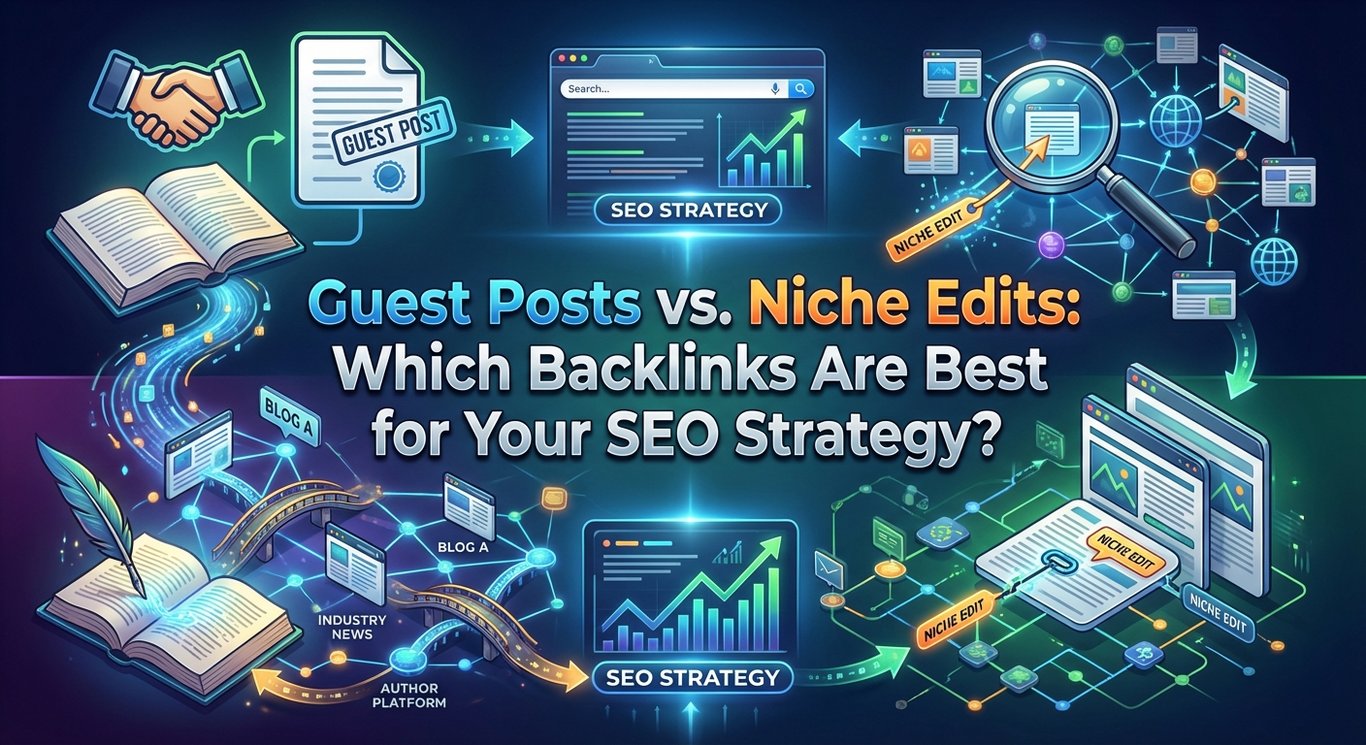
Introduction to Backlink Strategies
Guest posts and niche edits are two distinct methods for building backlinks, but they operate in very different ways. A guest post involves creating a brand-new piece of original content, writing it yourself or hiring a writer, and publishing it on someone else's website with a link back to your site included. On the other hand, a niche edit—sometimes called a curated link—involves reaching out to a site owner to insert your link into an article that has already been written, published, and indexed by Google. Understanding this fundamental difference is the first step in deciding which route is right for your campaign. 🔗
Both strategies play a crucial role in Search Engine Optimization (SEO) by signaling to search engines that your website is a trustworthy resource. When executed correctly, these methods can significantly boost your domain authority, improve your keyword rankings, and drive referral traffic to your business. It is important to note that both guest posting and niche edits are considered "white-hat" strategies as long as they are secured on high-quality, relevant websites rather than spammy link farms. By leveraging these techniques, you can build a robust backlink profile that stands the test of time.
What Are Guest Posts?
The process of securing a guest post is a hands-on effort that starts with finding authoritative websites in your industry and pitching them unique topic ideas. Once a site owner accepts your pitch, you must write a high-quality article that provides value to their audience while naturally incorporating a link back to your own site. After the content is written, it goes through an editorial review process before finally being published, which ensures the content meets the host site's standards. This manual outreach and creation process is what makes guest posting a labor of love. ✍️
One of the biggest benefits of guest posting is that it gives you complete control over the content, the context of your link, and the anchor text used. Beyond just the SEO value of the backlink, guest posts offer excellent brand exposure because your name and expertise are showcased to a new audience. Furthermore, because you are creating a new page on a high-authority site, there is a strong potential for that specific post to rank for its own keywords, driving direct traffic to your site for years to come. This makes guest posting a powerful tool for building a reputation, not just links.
However, the high level of effort and control involved in guest posting comes with a higher price tag and a longer timeline. Typically, the cost for a high-quality guest post can range anywhere from $300 to $500 per link when you factor in content creation and outreach fees. Additionally, the timeline from pitching to publishing can take several weeks or even months depending on the host site's editorial calendar. For businesses needing immediate results, this slower pace is something to consider before investing heavily.
What Are Niche Edits?
Niche edits involve finding relevant, high-quality articles that already exist on the web and asking the site owner to add a link to your resource within that content. Unlike guest posting, there is no need to brainstorm new topics or write lengthy articles because the page is already live and likely indexed by Google. The goal is to find a paragraph within an existing post that relates to your content and suggest a link placement that adds value to the reader. This method focuses on leveraging assets that are already performing well. 🎯
The primary advantages of niche edits are speed and cost-effectiveness, making them an attractive option for many SEO professionals. Since the content is already published, you can often see the link go live within 1 to 3 weeks, and the costs are generally lower, ranging from $150 to $300 per link. Furthermore, because the link is placed on a page that has already aged and built authority, the "link juice" is passed to your site almost immediately. This allows for faster improvements in your own site's metrics compared to waiting for a new page to gain traction.
"Guest posts usually provide a more significant and long-lasting SEO impact than niche edits." -Profit Engine
Despite these benefits, niche edits do come with certain limitations regarding creative control. Since you are inserting a link into pre-written text, you have limited ability to change the surrounding context or force a specific anchor text if it doesn't fit naturally. You are also relying on the existing quality of the article, meaning you cannot ensure the content is perfectly aligned with your brand voice. Consequently, niche edits require a careful selection process to ensure the placement makes sense for your SEO goals.
Key Differences: A Side-by-Side Comparison
When comparing guest posts and niche edits, the differences largely come down to speed, cost, control, and scalability. Niche edits are the clear winner if you need a faster turnaround and a lower price point, as they skip the content creation phase entirely. However, guest posts win when it comes to control, allowing you to dictate the topic, the surrounding text, and exactly how your brand is presented. While niche edits are easier to scale because they require less labor, guest posts offer a level of customization that is hard to beat. Choosing between them often depends on which of these factors matters most to your current campaign. ⚖️
Another critical distinction lies in how the SEO value is transferred from the host site to your site. Niche edits are placed on aged pages that often already have their own backlinks and traffic, meaning they pass authority (or "link juice") almost immediately after the link is indexed. In contrast, a guest post is a brand-new page that starts with zero authority and must build its own strength over time before it passes significant value to you. Therefore, niche edits offer a quick injection of power, while guest posts are an investment that matures and grows stronger over the long haul.
SEO Impact: Speed and Longevity
Niche edits are renowned for delivering quicker ranking improvements because they tap into the power of established content. When you secure a link on a page that Google has already crawled, indexed, and perhaps even ranked for keywords, the search engine recognizes the new link very quickly. This immediate recognition means you can often see movement in your own search engine rankings within a few weeks of the link going live. For campaigns that are under a time crunch, this speed is a massive advantage. 🚀
"Niche edits are typically more affordable than guest posts since they don’t require creating new content." -Setproduct
Guest posts, while slower to start, provide sustainable and compounding benefits that often outlast quick wins. Because you are contributing high-quality content, these posts can rank for long-tail keywords, bringing in a steady stream of referral traffic that niche edits rarely provide. Over time, as the guest post itself attracts backlinks and gains authority, the value passed to your site increases, creating a long-term asset for your backlink profile. This longevity makes guest posting a cornerstone of stable SEO strategies.
Interestingly, many SEO experts and case studies suggest that relying on just one method isn't as effective as using a combination of both. Data often shows that a diverse link profile containing both guest posts for topical relevance and niche edits for authority power yields the best results. By mixing the immediate impact of niche edits with the sustained growth of guest posts, you create a natural-looking backlink profile that search algorithms favor. Ultimately, a hybrid approach is usually the smartest play for serious growth.

Cost Analysis: Which Is More Budget-Friendly?
When breaking down the costs, it is important to understand what you are actually paying for with each method. Guest posts are generally more expensive because you are paying for the outreach time, the placement fee, and the cost of writing a high-quality article. Niche edits eliminate the writing cost and reduce the project management time, which naturally brings the price down significantly. However, prices can fluctuate based on the Domain Rating (DR) and traffic of the host website. 💸
If you are looking strictly at value per dollar, the "best" option depends on your immediate financial constraints and long-term goals. For tight budgets, niche edits offer a higher volume of links for the same spend, allowing you to boost authority across more pages. Conversely, if your goal is maximum ROI through brand building and referral traffic, the higher cost of a guest post is justified by the additional value it brings beyond just the link. Smart budget allocation usually involves dedicating a portion of funds to both to balance quantity with quality.
"Niche edits often provide faster impact because the page already has authority. Guest posts can provide greater long-term value if the content attracts its own links." -Backlink Grid
Pros and Cons of Guest Posts
Guest posting comes with a strong list of pros, including the ability to build thought leadership, precise control over anchor text, and the potential for referral traffic. It is an excellent way to network with other industry leaders and get your brand name in front of new eyes. However, the cons are significant: it is time-intensive, requires a budget for content creation, and scaling it up takes a lot of manpower. Understanding these trade-offs is essential for managing expectations. ✅
To maximize the effectiveness of your guest posts and mitigate the downsides, you should focus on targeting sites with a high Domain Rating (DR) and real organic traffic. Don't just write for the link; write content that is genuinely useful so that the host site wants to promote it to their audience. Additionally, try to build relationships with editors so you can publish multiple times, reducing the time spent on cold outreach. By prioritizing quality over quantity, you ensure that every dollar spent on guest posting works harder for your SEO.
Pros and Cons of Niche Edits
The primary pros of niche edits are that they are fast, scalable, and require very little effort on your part compared to guest posting. They allow you to leverage the authority of pages that have already stood the test of time, giving your SEO a quick boost. On the downside, you miss out on branding opportunities, and there is a risk of the link looking out of place if the surrounding text isn't relevant. Furthermore, you have less control over the link placement than you would with a fresh article. ⚡
To ensure your niche edits are safe and effective, you must follow best practices regarding relevance and placement. Only request edits on articles that are topically related to your own content, ensuring the link makes sense to a human reader, not just a search bot. Avoid sites that look like they sell links publicly or have "write for us" pages that are spammed with low-quality content. By being selective and insisting on natural placement, you can enjoy the speed of niche edits without risking a penalty.
"At Embarque, we’ve proven their success, like increasing a SaaS client’s traffic 60x in a year." -Embarque

When to Choose Guest Posts Over Niche Edits
You should choose guest posts when your primary goal is long-term authority building and increasing brand visibility within your industry. If you are launching a new product or trying to establish yourself as a thought leader, the exposure from a guest post is invaluable. The ability to craft the narrative and present your brand exactly how you want makes this strategy superior for reputation management. It is a long game, but one that builds a solid foundation. 🏗️
Guest posts are also the better choice for SaaS companies or competitive niches where topical depth is required to rank. In these industries, a simple link might not be enough; you need to demonstrate expertise to convince Google that your site is authoritative. By publishing in-depth articles on other reputable sites, you create a web of relevance that supports your main keywords. This depth is something niche edits simply cannot provide.
Finally, scenarios involving in-house content teams or specific keyword-targeted campaigns favor guest posting. If you already have writers on staff, the cost of content creation is lower, making guest posting more viable. Additionally, if you need to rank for a very specific, difficult keyword, writing a dedicated guest post allows you to optimize the entire page around that topic, funneling highly relevant relevance to your site. In these specific cases, the manual effort of guest posting wins every time.
Best Practices for Implementation
Regardless of which method you choose, success relies on strict site selection criteria and smart execution. Always aim for websites with a Domain Rating (DR) of 30 or higher and, more importantly, verified organic traffic to ensure the site isn't a "ghost town." When planning your anchor text, keep it natural; use a mix of branded, naked URLs, and partial-match keywords rather than over-optimizing with exact-match phrases. Effective outreach involves being polite, personalized, and clear about the value you are offering the site owner. 🛠️
It is also critical to warn against black-hat risks associated with buying cheap links from Fiverr or spammy networks. These can lead to Google penalties that destroy your traffic overnight. Instead, focus on diversification by securing links from a variety of domains and using both guest posts and niche edits. A natural backlink profile is never 100% one type of link, so mixing your methods protects you from algorithm updates. Safety and quality should always be your top priorities.
Conclusion
In the debate between guest posts and niche edits, there is no single winner that takes the trophy for every situation. Niche edits are the champions of speed and budget efficiency, perfect for giving your site a quick boost by leveraging existing authority. Guest posts, however, are the heavy lifters for long-term brand building, referral traffic, and establishing deep topical relevance. For most website owners, the optimal strategy isn't choosing one over the other, but rather integrating both to cover all bases. A healthy SEO campaign relies on the diversity and natural appearance that a hybrid approach provides.
As you move forward, remember that quality always trumps quantity; one link from a high-traffic, relevant site is worth more than fifty links from spammy blogs. Align your choice with your specific goals: choose niche edits when you need to move the needle fast, and invest in guest posts when you want to build a brand that lasts. Monitor your progress using tools like Ahrefs or SEMrush to see what is working best for your niche. Assess your SEO needs today—start with niche edits for immediate boosts or guest posts for lasting growth, and build a hybrid strategy to dominate rankings in "Guest Posts vs. Niche Edits: Which Backlinks Are Best for Your SEO Strategy?". 👋
FAQ
Are niche edits faster than guest posts?
Yes, niche edits provide a much quicker SEO impact because the links are inserted into content that is already indexed and aged by Google, allowing the authority to pass to your site almost immediately.
Which is cheaper: guest posts or niche edits?
Niche edits are generally cheaper than guest posts because they do not require the time, effort, or expense of creating new content, making them a more budget-friendly option for many marketers.
Can I combine guest posts and niche edits?
Yes, combining both strategies is highly recommended as it creates a more natural and diverse backlink profile; a common approach is a 70/30 split favoring guest posts for relevance and branding.
Do guest posts build more authority?
Yes, guest posts often build more long-term authority because they involve creating original, high-quality content that can rank on its own, attract additional backlinks, and drive referral traffic.
Are niche edits safe for SEO?
Yes, niche edits are safe for SEO as long as they are secured on relevant, high-quality websites with real traffic and you avoid spammy practices like inserting links into unrelated content.